
Financing Heavy Equipment With No Money Down: Costs and Tax
Posted by United Lift LLC on
Keeping cash in the business can matter as much as getting equipment on site. Financing heavy equipment with no money down can avoid an upfront down payment, but the agreement may still require fees or a first payment at signing. The tradeoff may be higher monthly payments, a longer term, or obligations at the end of the agreement.
It’s reasonable to want equipment without draining cash needed for everyday operations. The right financing structure can help preserve working capital while spreading the purchase cost over time, but the payment schedule and final terms matter. For tax year 2026, qualifying equipment may be eligible for Section 179 deductions when it meets the requirements and is placed in service during the tax year, according to the Internal Revenue Service.
This guide explains how equipment financing works, what no-down-payment options may involve, and how to weigh potential tax treatment against total cost. You’ll also learn how United Lift can help when you’re ready to explore equipment for your operation.
Key Takeaways
- Understand how equipment financing spreads a purchase over time and what financial documents a lender may request.
- Learn when qualifying equipment placed in service during tax year 2026 may be eligible for Section 179 or bonus depreciation.
- See which borrower, business, and equipment factors can affect no-down-payment financing options.
- Weigh the cash-flow benefit of keeping money available for operations against payment schedules and possible upfront fees.
What is equipment financing, and how does it help small businesses?
Equipment financing lets a business acquire a machine without paying its full purchase price upfront. The lender finances the purchase, and the business repays the balance over an agreed term. This can leave more cash available for payroll, inventory, and other operating needs. For example, a business might finance a forklift or truck instead of paying the full amount from its operating account.
The financed equipment usually secures the transaction. The borrower signs a UCC filing that gives the lender a security interest in the equipment. If the borrower defaults, that interest can affect its rights to the machine. Before accepting an approval, review the payment amount, repayment schedule, and security terms. Together, these details show how financing affects cash flow and equipment ownership.
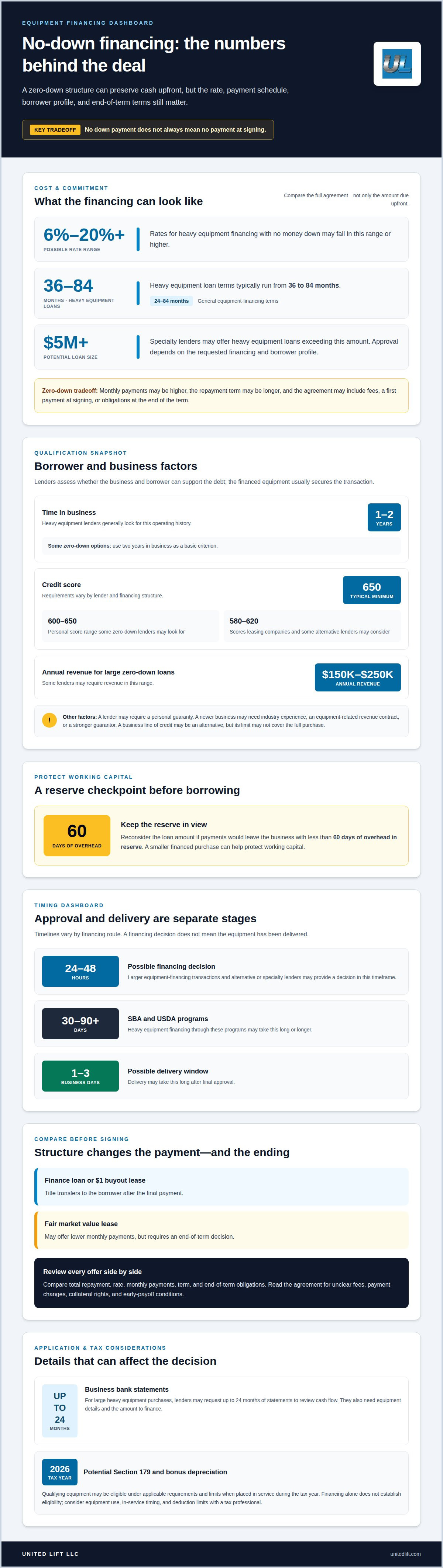
Prepare for the application by gathering accurate business and purchase details. For large heavy equipment purchases, lenders may request up to 24 months of business bank statements. These records help show the business’s cash flow across different periods. The lender also needs information about the equipment and the amount to finance. Complete, consistent details help the lender assess the transaction and structure a suitable offer.
An online application typically starts with business information and equipment details. The lender reviews the application and supporting documents, assesses the transaction, and communicates its decision. After approval, the agreement sets out repayment and security terms. Once the borrower accepts and completes the required signing and funding steps, the seller can receive payment and the business can arrange delivery. The precise sequence depends on the lender and transaction.
Approval timelines vary by financing route. Larger equipment-financing transactions may receive a decision within 24 to 48 hours. SBA and USDA heavy equipment financing programs may take 30 to 90 or more days. After final approval, delivery may take one to three business days. These are different stages: a financing decision doesn’t itself mean the equipment has been delivered. Consider the timeline alongside the machine’s role in your operation.
Does equipment financing qualify for Section 179?
Compare offers side by side, including total repayment, rate, monthly payments, term, and end-of-term obligations. Before signing, read the full agreement for unclear fees, payment changes, collateral rights, and early-payoff conditions. These checks can help you spot unfavorable terms.
For tax year 2026, U.S. businesses may be able to deduct qualifying equipment under Section 179 and bonus depreciation, subject to applicable requirements and limits, according to the Internal Revenue Service. Equipment may qualify for Section 179 when it meets the requirements and is placed in service during the tax year, also according to the Internal Revenue Service. Financing alone doesn’t establish eligibility. Business owners should consider the equipment’s use, when it enters service, and applicable deduction limits with their tax professional.
Loan amounts and approval depend on the requested financing and borrower profile. Specialty lenders may offer heavy equipment loans exceeding $5 million. Heavy equipment loan terms typically run from 36 to 84 months, while equipment-financing terms generally range from 24 to 84 months. The lender evaluates the business, equipment, and repayment terms when deciding whether the transaction fits its criteria. A larger amount can mean a longer repayment commitment, so match the financed amount to the machine’s role and expected cash flow.
Rates for heavy equipment financing with no money down may range from 6% to 20% or more. A zero-down structure can raise monthly payments or extend the term. A finance loan or $1 buyout lease transfers title to the borrower after the final payment. A fair market value lease may lower monthly payments, but requires an end-of-term decision. Compare these structures, not just the initial payment.
Reconsider the loan amount if payments would leave the business with less than 60 days of overhead in reserve. A smaller financed purchase can help protect working capital. Alternative and specialty lenders may decide within 24 to 48 hours, while SBA and USDA financing programs may take 30 to 90 or more days. Build the approval timeline and repayment schedule into the equipment purchase plan.
Where Can You Finance Trucks or Equipment for No Money Down?
Yes. Some lenders offer no-down-payment financing, though qualification standards may be stricter. Trucks and other heavy equipment may qualify, depending on the lender, borrower, business, and equipment.
Borrower and Business Qualifications
Lenders assess whether the business and borrower can support the debt, and the equipment can secure the transaction. Heavy equipment lenders generally look for one to two years in business; some zero-down options use two years as a basic criterion. Large zero-down loans may require annual revenue of $150,000 to $250,000. Lenders may also require a personal guaranty. A business line of credit is another possible funding source, but its limit depends on the lender’s assessment and may not cover the full purchase.
Credit Score and Time in Business
Credit scores and operating history help lenders evaluate repayment risk, so both can affect available terms. A credit score of 650 is a typical minimum, while zero-down lenders may look for personal scores from 600 to 650. Leasing companies and some alternative lenders may consider scores from 580 to 620. These ranges vary by financing structure. A newer business may need industry experience, a revenue contract tied to the equipment, or a stronger guarantor to support its application.
Trucks and Equipment Eligible for Financing
Financing may cover trucks and other business equipment, with the machine serving as collateral. Lenders typically prefer heavy equipment under 10 years old. Equipment condition, resale value, and the borrower’s credit profile can influence approval and the amount financed. For qualifying farms, USDA Farm Service Agency loan programs may cover 95% to 100% of agricultural heavy equipment purchase costs. Manufacturer promotions may also offer 0% financing for 12 to 24 months on new heavy equipment. Full financing still depends on program and borrower qualifications.
Advantages of financing equipment with no money down
Financing without a down payment can preserve cash at purchase, leaving more working capital for operating needs. For example, a construction business may keep funds available for payroll, fuel, or materials while acquiring a machine for a new project. Owners avoid using a large cash balance upfront. The benefit is timing: repayments are spread over the financing term, while reserves remain available for other planned costs.
Financing can also help coordinate cash flow with revenue cycles. If project income arrives after expenses, keeping cash on hand can help cover costs before customer payments come in. Some financing structures offer seasonal schedules or skipped payments for businesses with significant seasonality, aligning payment timing with revenue patterns. Before choosing a structure, map expected income and regular expenses against the proposed schedule.
Access to equipment can support work the business might otherwise delay. For example, a contractor may acquire a machine needed for a scheduled project while preserving cash for materials and labor. This doesn’t guarantee additional revenue; it provides a way to fund an asset without paying the full amount upfront. Consider whether the equipment has a clear operational role and whether its payments fit the project’s cash flow.
No down payment doesn’t always mean no cash due at signing. Documentation or filing fees, or a first payment, may still be required. Include those items in the funding plan, alongside ongoing payments. Treat a potential Section 179 deduction as a separate tax consideration, not a replacement for scheduled loan payments. Before you submit an application, account for the financing obligation and the cash reserves your business needs. If an attachment is part of the equipment plan, explore equipment attachments as you plan the purchase.
United Lift: Equipment Attachments
United Lift offers equipment attachments for businesses planning a material-handling purchase. An attachment can be part of the equipment decision alongside forklifts, boom lifts, or telehandlers. Consider the tasks your operation needs to handle, then explore equipment options that meet those requirements.
United Lift also offers financing options for equipment purchases. As you review no-down-payment financing, consider the equipment and any attachments as part of the full purchase plan. The right setup depends on the work, the machine, and terms that fit your business’s cash flow.
For a practical next step, explore United Lift’s equipment attachments and related equipment offerings. Contact United Lift to discuss your equipment needs.
Plan Your Next Equipment Purchase
Turn the financing decision into an equipment plan built around the work ahead. Match the machine’s configuration to daily tasks, site conditions, and upcoming project demands. This keeps the purchase focused on productive use, not financing alone.
If you’re considering financing heavy equipment with no money down, assess the equipment and agreement together. United Lift offers forklifts, boom lifts, and telehandlers, along with equipment attachments. Start with the work your operation needs to handle, then consider which equipment fits those demands. A clear use case can help you make a more focused purchasing decision.
Bring your equipment needs into the financing conversation. Contact United Lift about financing and discuss the equipment options that fit your operation. Your next move can be practical, informed, and ready for the work ahead.
Frequently Asked Questions
Do I need a down payment, and can I finance soft costs like delivery or installation?
Not every financing arrangement requires a down payment, and some lenders may finance the full equipment invoice. Depending on the agreement, the financed amount may also include freight, installation, or sales tax. Ask how each item is included in the amount financed and repayment schedule. For example, adding installation can reduce upfront cash needs while increasing the balance you repay.
Do I need financial statements or tax returns?
Lenders set documentation requirements based on the transaction and borrower. For large heavy equipment purchases, a lender may request up to 24 months of business bank statements. These records help show cash flow and support the application. Tax returns can also be requested as part of a lender’s financial review. Organize business records before applying so the lender can assess the same, complete information.
Does no money down mean I pay nothing at signing?
No. A zero-down arrangement removes the down payment, but it doesn’t necessarily eliminate every expense due at signing. The agreement may include documentation or filing fees, or require the first payment at signing. Review the amount due before accepting the financing. Separate the down payment from other initial charges so your cash-flow plan accounts for both.
How Does Zero Down Financing Work?
The lender finances the equipment purchase without requiring a down payment, and the business repays the balance under the agreement. The lender evaluates the business, borrower, and equipment before setting its terms. The amount financed may sometimes include costs such as freight or installation. Check how the agreement handles those expenses, the payment schedule, and any obligations due at the end.
How fast can I be approved for 100% financing?
Some alternative and specialty lenders provide decisions within 24 to 48 hours. Same-day approvals are common for equipment-financing deals under $250,000. These timelines refer to decisions, not necessarily completed funding or equipment delivery. The transaction still needs to move through its required approval and signing steps. A complete application helps the lender review the request without waiting for missing information.
How fast will I get a decision?
Decision time depends on the financing route and application. Larger equipment-financing transactions may receive decisions within 24 to 48 hours, while SBA and USDA heavy equipment financing programs can take 30 to 90 or more days. These are different paths, so align the funding route with your purchase schedule. A quick decision also doesn’t mean the equipment is delivered immediately.
- Tags: business loans, equipment financing, equipment leasing, financing heavy equipment with no money down, heavy equipment, no money down, Section 179, tax deductions, working capital
