
Find a Hyster Telehandler Dealer: A Practical Buyer’s Guide
Posted by United Lift LLC on
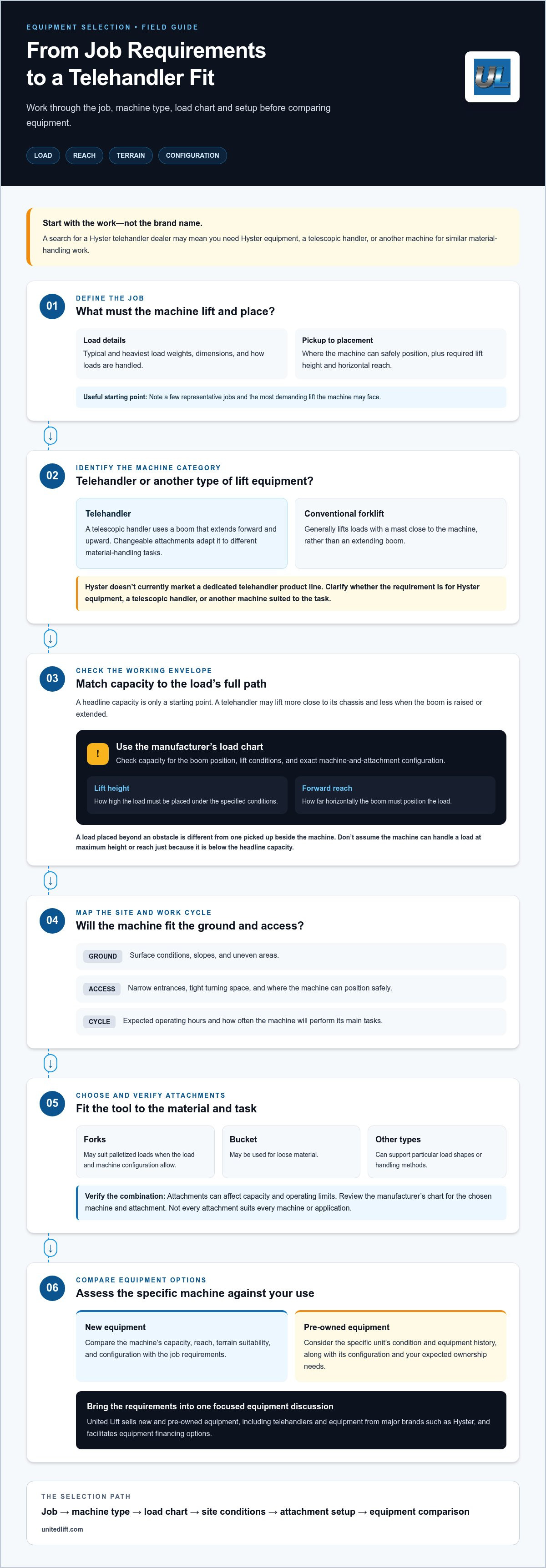
A search for a Hyster telehandler dealer can point to two different equipment needs: a Hyster machine or a telescopic handler. Hyster doesn’t currently market a dedicated telehandler line, so it’s important to identify the machine type your work requires before comparing brands. Start with the job, then narrow your options by capacity, reach, terrain, and configuration.
Those details determine whether a machine can safely and efficiently handle your loads. Consider where you’ll pick up and place materials, what the ground is like, and which attachments the work calls for. If you’re comparing new and pre-owned equipment, also weigh the specific unit’s condition and configuration against your expected use.
This guide explains how to define your equipment requirements, compare telehandlers with Hyster equipment, and include attachments and financing in your buying decision. United Lift sells new and pre-owned equipment, including telehandlers and equipment from major brands such as Hyster, and facilitates financing options. Use the steps below to prepare for a focused equipment conversation.
Key Takeaways
- Start with the loads, lift height, forward reach, and terrain your work requires before narrowing equipment options.
- Use the load chart to assess capacity at the boom position you’ll use, not just the machine’s maximum rated capacity.
- When comparing new and pre-owned equipment, consider the job, machine condition, equipment history, and expected ownership needs.
- A Hyster telehandler dealer search is more productive when you clarify whether you need a telescopic handler or another machine suited to the task.
- United Lift sells telehandlers and equipment from major brands, including Hyster, and facilitates equipment financing options.
Looking for a Hyster Telehandler Dealer? Start with the Job
Do you need to place materials at an elevated level, move loads over uneven ground, or reach beyond the machine’s immediate position? Define the task before choosing equipment. A search for a Hyster telehandler dealer may reflect interest in Hyster equipment, a telehandler, or another machine for similar material-handling work. Hyster doesn’t currently market a dedicated telehandler product line, so be clear about both the machine category and the job.
A telehandler is a telescopic handler with a boom that extends forward and upward, plus attachments that can be changed to suit different material-handling tasks. A conventional forklift generally lifts loads using a mast close to the machine. A telehandler instead uses its extending boom to place loads at height or reach forward. The telescopic handler overview explains the machine’s basic design and range of uses.
Capacity, reach, terrain, and work cycle all affect equipment fit. A useful equipment discussion starts with those requirements, not just a brand or machine name. United Lift sells telehandlers and equipment from major brands, including Hyster equipment. Describe the work so you can focus on options relevant to the application.
What work is a telehandler designed to handle?
Telehandlers move and position materials where a forklift’s mast-and-fork setup may not provide the needed reach. On a construction site, a telehandler may be used to lift building materials toward an elevated work area. In an industrial setting, it can help position loads at a storage location or move materials across a work area.
The boom extends the machine’s working reach, but the task matters. Lifting a load straight up is different from placing it forward at height. Attachments can adapt a telehandler to different types of loads, but not every machine or attachment suits every application. Note the load, pickup point, and placement point before narrowing your choices.
What information should you bring to a dealer?
Bring practical details, even if some are estimates. A few representative jobs can show what the machine needs to do regularly, as well as the most demanding lift it may face. Record:
- Load details: Typical and heaviest load weights, plus how loads are handled.
- Placement needs: Required lift heights and horizontal reach, measured from where the machine can safely position.
- Ground and access: Surface conditions, slopes or uneven areas, and limits such as narrow entrances or tight turning space.
- Work cycle: Expected operating hours and how often the machine will perform its main tasks.
- Attachments: Current or planned attachments and how frequently each will be used.
These details give a Hyster telehandler dealer inquiry a practical starting point, even if you’re still deciding between a telehandler and another type of lift equipment. Clear requirements help you compare machines and configurations against the work instead of relying on a name alone.
Match Hyster Telehandler Capacity, Reach, and Attachments to the Work
Once you’ve defined the job, compare equipment by what it can lift and where it needs to place the load. A headline capacity rating is only a starting point. A telehandler’s rated capacity applies under specified conditions, and its ability to handle a load can change as the boom rises or extends.
How do load capacity and reach work together?
Consider the load’s full path, from pickup to final placement. A machine may lift a load close to its chassis but have less capacity when the boom is extended forward or raised. The manufacturer’s load chart is essential: it shows capacity across boom positions and lift conditions for the applicable machine configuration.
Match the chart to the exact setup, including the attachment. Don’t assume a machine can handle a load at maximum height or reach just because the load is below its headline capacity. Picking up a pallet beside the machine is different from placing it beyond an obstacle. Share the load weight and intended placement when discussing equipment, then review the relevant chart before choosing a machine.
Maximum lift height and forward reach address different needs. Height indicates how high a load can be placed under specified conditions; forward reach describes how far the boom can position a load horizontally. If the work involves placing materials beyond a wall or into a set-back area, reach may matter as much as height. Evaluate the actual pickup and set-down points, not just the highest or farthest point in a product description.
Which attachments could support your application?
Choose an attachment for the material and task. Forks can suit palletized loads when the load and machine configuration allow. A bucket may be used for loose material, while other attachment types support particular load shapes or handling methods. These are application-dependent examples, not a guarantee that every attachment fits every machine or task.
An attachment can affect capacity and operating limits, so consult the manufacturer’s chart for the chosen machine and attachment combination. Also consider how often you’ll switch attachments and whether each one supports regular work. OSHA provides guidance on powered industrial trucks; review the relevant requirements for the equipment and its intended operation.
| Compare | What to assess |
|---|---|
| Load | Weight, dimensions, and pickup method |
| Placement | Required height and horizontal reach |
| Attachment | Task fit and chart for the configured machine |
| Work area | Obstacles and space to position the equipment |
Bring these criteria together before comparing machines. Explore telehandler options with United Lift and discuss equipment choices for your application.
Compare Hyster Telehandler Purchase Options and Dealer Support
Once the job requirements are clear, compare equipment based on how it will be used and what you know about its condition. A new machine and a pre-owned one may each suit an operation, depending on workload, equipment needs, and ownership plans. Compare specific units and their documentation rather than assuming one purchase route is right for every buyer.
When might a new or pre-owned telehandler fit better?
A new telehandler may suit a buyer looking for a new unit configured for the planned work. A pre-owned machine may be worth considering when its condition, configuration, and documented history align with the application. Review the records and condition details available for the specific unit, then weigh them against expected use and ownership needs. Neither option is automatically the better fit.
What should a useful dealer conversation cover?
Bring the application and key requirements into the discussion: load types and weights, capacity needs, lift height, forward reach, terrain, and intended configuration. Include attachment requirements, too. These details help connect your work to relevant telehandler options rather than comparing equipment by brand name alone.
Compare equipment by application fit, documented condition, configuration, and the ownership needs it must support.
For each unit under consideration, organize the information so you can make a like-for-like comparison:
- Application fit: Does the described capacity, reach, and configuration suit the work?
- Condition and history: What condition details and equipment records are available for a pre-owned unit?
- Attachments: Which attachments are included or needed, and what configuration information applies?
- Purchase details: What is included in the proposed transaction, and what documentation will accompany the equipment?
- Ownership planning: How does the option align with expected use and the operation’s equipment plans?
A clear Hyster telehandler dealer conversation should leave you with understandable information about the equipment being discussed. United Lift sells new and pre-owned equipment, including telehandlers and equipment from major brands such as Hyster. The company also facilitates financing options, which can be part of the purchase discussion alongside a careful equipment comparison.
Keep manufacturer network information separate from the details provided by an individual seller. A manufacturer’s dealer network describes its own structure; it doesn’t, by itself, explain what a particular seller provides in a specific transaction. Focus on the equipment information, purchase details, and financing options relevant to the unit you’re considering.
The Defense Logistics Agency’s information on government procurement of heavy equipment offers a broader example of procurement centered on defined equipment needs. Apply the same practical discipline to your purchase: document requirements, compare the details of each option, and choose based on the work ahead.
Use This Hyster Telehandler Buying Checklist Before You Decide
Write down your job requirements before comparing equipment. This helps keep important details from getting lost in a product discussion and makes it easier to judge whether a machine’s configuration suits the work. If you’re searching for a Hyster telehandler dealer, use the same checklist in each discussion so you can compare options against consistent needs.
Build a clear jobsite requirements brief
Describe the most demanding routine lift, not just an average task. Record where the machine will work, what it must handle, and any limits that could affect positioning. Clear notes make it easier to discuss suitable equipment and attachments.
- Loads: Record the typical and heaviest loads, including their weight, size, and how they’re picked up.
- Lift height: Note the height where loads must be placed or retrieved.
- Forward reach: Estimate how far the load must travel horizontally from the machine’s working position.
- Terrain: Describe the surfaces and ground conditions across the work area.
- Operating environment: Note whether the machine will work indoors, outdoors, or across different areas, along with relevant site conditions.
- Access constraints: Identify narrow entrances, low-clearance areas, tight turns, obstacles, and space for maneuvering.
- Attachments: List attachments needed now or planned for later, plus how often each will be used.
- Usage expectations: Describe expected operating hours, work frequency, and any other constraints that shape the machine’s role.
Review the equipment and purchase details
Compare equipment specifications with your written brief. For pre-owned equipment, review condition details and available history information for the specific unit. Include attachment requirements and ownership expectations in the comparison from the beginning.
Check the manufacturer’s specifications and load chart for the exact machine and configuration under consideration. Confirm that the chart addresses the intended attachment, boom position, load, height, and reach. A general capacity figure alone doesn’t show whether a particular lift is suitable.
Complete the brief with purchase considerations. Note what equipment information and documentation you need to review, and outline how the purchase fits your business’s plans. If financing is relevant, include it in the discussion without letting it replace the equipment-fit assessment. Use the same written requirements to compare each option.
For this decision, focus on application fit, configuration, condition, documentation, and purchase needs. United Lift sells new and pre-owned telehandlers and equipment from major brands, including Hyster, and facilitates financing options.
Have your requirements ready? Discuss telehandler options with United Lift and use your checklist to guide the conversation.
Explore Hyster Telehandler Options with United Lift
After defining your equipment needs, United Lift LLC is a direct point of contact for discussing material-handling equipment. The company serves customers nationally and sells telehandlers and equipment from major brands, including Hyster. New and pre-owned equipment options let buyers compare units against their application and purchase needs.
The phrase “Hyster telehandler dealer” may describe a search for a specific brand, a telescopic handler, or equipment suited to a similar material-handling job. Bring your requirements into the conversation so the comparison can focus on intended work, configuration, condition, and purchase approach. You don’t need every detail settled before you start. A clear outline of the application is a useful starting point.
What can buyers discuss with United Lift?
Describe the work the equipment needs to handle. Include the loads, required reach, site terrain, and attachment needs. If you’re weighing new against pre-owned equipment, explain how often the machine will be used and which ownership needs matter most. That context keeps the comparison focused on relevant options rather than broad product descriptions.
You can also include financing in the purchase discussion. United Lift facilitates equipment financing options, giving buyers a way to discuss how financing may fit their purchasing approach. Rates and terms depend on the specific financing arrangement, so review the details of the option being considered alongside your equipment priorities.
To make the conversation productive, have these points ready:
- Application: The tasks the equipment will perform and where it will operate.
- Configuration: Capacity, reach, and attachments needed for the work.
- Purchase preference: Whether you’re comparing new or pre-owned equipment.
- Priorities: The condition information, equipment details, and financing discussion that matter to your decision.
Take the next step toward a telehandler purchase
United Lift supports customers nationally by phone and email seven days a week. Share your requirements, discuss equipment options, and move from an initial search toward a focused purchase conversation. Clear details about your operation help keep the discussion practical, whether you’re still narrowing the equipment category or comparing specific units.
If you’re searching for a Hyster telehandler dealer, keep the job at the center of the decision. United Lift sells telehandlers and equipment from major brands, including Hyster, and offers new and pre-owned equipment alongside financing options. Bring your load, reach, terrain, attachment, and ownership priorities to the conversation.
Start an equipment inquiry with United Lift and discuss telehandler options for your operation.
Turn Your Equipment Priorities into a Clear Next Step
A search for a Hyster telehandler dealer can start the process, but your decision becomes clearer when you separate must-haves from preferences. Rank the requirements that can’t be compromised, then note where you have flexibility. This makes trade-offs easier to identify and helps keep an appealing option from distracting you from the work the machine needs to do.
Use your shortlist to identify unanswered questions about the equipment or purchase. Write them down as you compare options so the next conversation can focus on decisions rather than retracing your research. You don’t need every detail resolved before taking that step. A clear sense of your priorities is enough to move forward.
Explore telehandler purchase options with United Lift and bring your priorities to the discussion. A focused conversation can help you take the next step toward a purchase.
Frequently Asked Questions
What does a Hyster telehandler dealer help buyers with?
A dealer conversation can help you clarify which equipment category and configuration suit your material-handling needs. Hyster doesn’t currently market a dedicated telehandler line, so the phrase “Hyster telehandler dealer” may refer to interest in Hyster equipment or a telehandler for similar work. United Lift sells telehandlers and equipment from major brands, including Hyster, and can discuss options based on your application. A Hyster forklift and a telehandler are different machine types.
How do I choose the right Hyster telehandler for my job?
Start with the lift you need to complete most often, then compare equipment against the load, placement point, and route to that location. A load picked up in an open area differs from one that must pass through a restricted entrance. Confirm the equipment’s specifications and applicable load chart for the planned setup. If considering Hyster equipment, verify its specific product category and manufacturer specifications before comparing it with a telehandler.
Can a telehandler use different attachments?
Yes, telehandlers can use different attachments when the attachment suits the machine and task. Forks may handle compatible palletized loads, while other attachments are designed for different material-handling applications. Consider the material’s shape and how it needs to be picked up or placed. Attachment compatibility and the machine’s applicable load chart matter because a changed setup can affect operating capacity and limits.
What should I check when buying a pre-owned Hyster telehandler?
First, confirm what type of machine you’re evaluating, since Hyster doesn’t currently market a dedicated telehandler line. For any pre-owned unit, review its available history and condition information. Examine relevant areas such as the boom, tires, forks or attachment, controls, and visible signs of leaks or damage. Compare the equipment’s specifications with your intended work, and make sure the documentation relates to that specific unit and configuration.
Does United Lift offer financing for telehandlers?
United Lift facilitates equipment financing options for buyers considering a telehandler purchase. Include financing in the buying discussion alongside the equipment’s application, configuration, and condition. To make the conversation useful, have a general sense of your purchase priorities and the equipment you’re considering. Terms depend on the financing arrangement, so review the details provided for your situation rather than relying on a general estimate.
Is a telehandler the same as a forklift?
No. Both handle materials, but they’re distinct equipment types. A conventional forklift typically raises loads with forks on a mast, while a telehandler uses a telescopic boom to position compatible loads forward and at height. The distinction matters in a purchase search: a Hyster forklift isn’t automatically a telehandler, even if both could serve material-handling needs. Compare the machine’s design and capabilities with the task you need to perform.
- Tags: buyer guide, equipment dealers, equipment financing, heavy equipment, Hyster, Hyster telehandler dealer, material handling, telehandlers
