
Forklift Blind Spot Safety: 2026 Buying Guide
Posted by United Lift LLC on
A forklift clears a pallet from a rack, but the load blocks the operator’s view of the route ahead. A mirror, camera, or sensor may help, yet no single device covers every truck, load, or traffic pattern. Choosing forklift blind spot safety solutions starts with identifying where visibility is lost and who or what shares that space.
When comparing technology with physical controls and operating practices, focus on the conditions that shape visibility: lighting, aisle layout, truck design, attachments, and the loads being moved. This guide explains how to identify risky blind spots and interactions, compare common solutions by their coverage and limitations, and build a practical plan for your workplace.
Mirrors, cameras, detection systems, barriers, and operating habits all have a role in a layered approach. The mast, load, and route affect what an operator can see, so the plan should fit the work rather than rely on a device shortlist. The goal is a workable combination of equipment, facility controls, and operator actions.
Key Takeaways
- Map work tasks, truck types, loads, routes, and pedestrian crossings to pinpoint where visibility gaps matter most.
- Compare forklift blind spot safety solutions by what they help operators see or separate, and by the conditions that can limit them.
- Use a site assessment to select candidate controls, test them in real operating conditions, and review how well they work.
- Build everyday use into the plan with clear traffic layouts, worker briefings, operating practices, and routine checks.
- Match vehicle-mounted aids and facility-level measures to the specific visibility challenge instead of relying on a single fix.
Where forklift blind spots occur, and why one fix rarely covers them all
A forklift blind spot is any area the operator can’t reliably see from the operating position. Its location depends on both the truck and the task. The mast and overhead structure can interrupt sightlines, while a carried load may block the view ahead. Turning changes what the operator can see around the truck’s corners, and visibility can shift as the load is raised or lowered.
Visibility limits are only part of the risk. A pedestrian stepping into an aisle, a vehicle approaching an intersection, or people and equipment sharing a doorway can create a conflict even when the operator’s view is relatively clear. General background on forklift design and hazards helps explain why vehicle structure and load handling affect visibility. A workplace plan, however, should be based on actual tasks and traffic patterns.
Blind-spot controls must reflect the work task and site, because the same truck can have different visibility challenges on different routes.
Which forklift blind spots deserve attention first?
Check forward, rear, and side views, but don’t assume every forklift has the same blind spots. A bulky load may obstruct the forward view; mast components or attachments can limit sightlines in particular positions; and the rear or sides may be harder to monitor during turns. Travel direction, lift height, and how a load is carried all affect what the operator can see.
Observe routine work rather than relying on a parked-truck check. Note where operators repeatedly change position, pause to look, or approach pedestrian crossings and intersections with restricted views. Record which truck, load, attachment, route, and task are involved. Those recurring points provide a practical basis for prioritizing forklift blind spot safety solutions.
Why is a single visibility device not a complete safety plan?
A mirror, camera, or sensor can support awareness, but it doesn’t remove every obstruction or interaction. Mirrors require the operator to look at them; cameras and alerts can’t manage traffic flow on their own. Pedestrians may enter from a doorway or cross an aisle, and mixed vehicle and foot traffic can create conflicts beyond a forklift’s immediate blind spots.
More technology doesn’t automatically mean safer operations. A device that doesn’t suit the truck, task, or visibility conditions may leave important gaps. Pair visibility aids with clear site controls and careful operating practices. Fleet planning should also account for equipment fit. United Lift LLC's new and pre-owned forklifts give businesses options to consider for their applications, while the workplace plan addresses shared routes and restricted views.
Forklift blind spot safety solutions compared: mirrors, cameras, sensors, and barriers
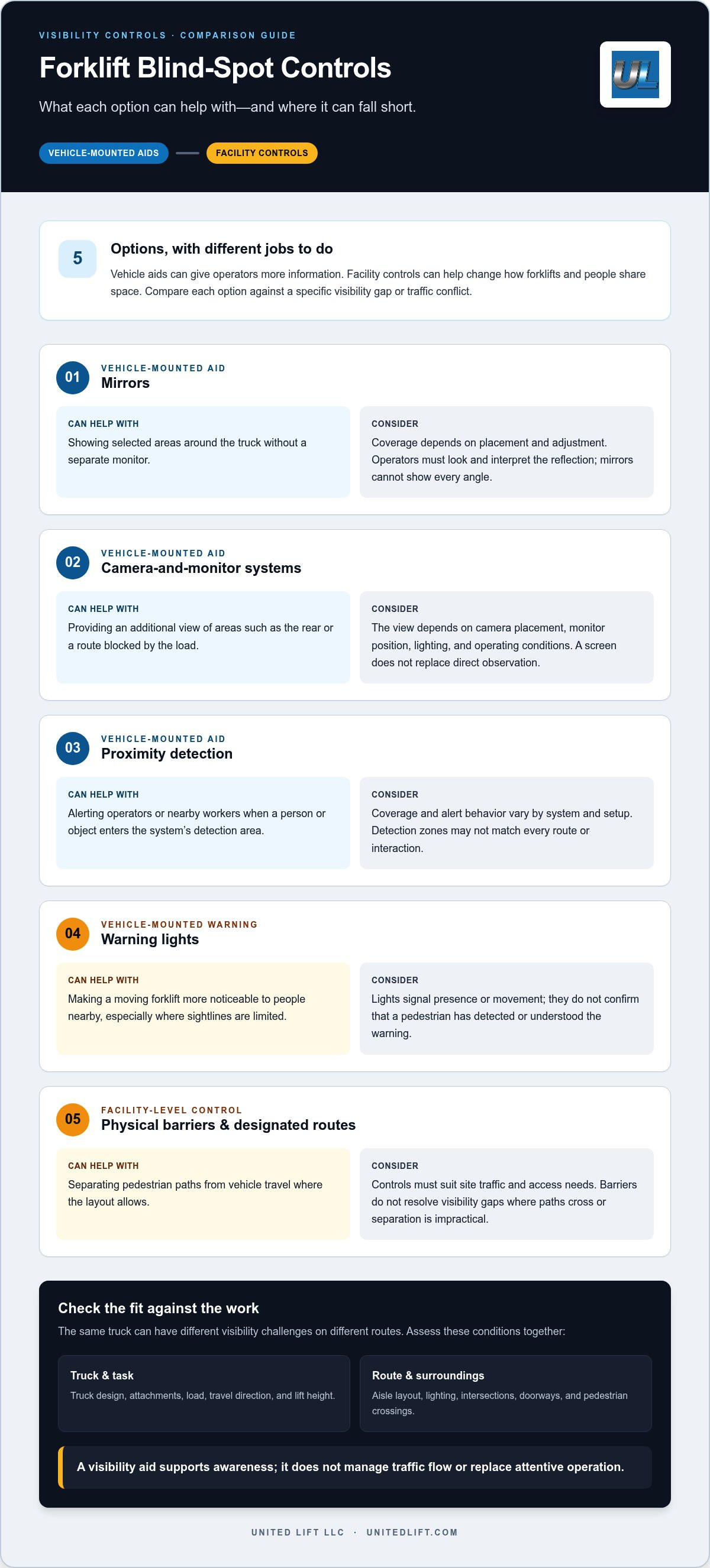
Compare each option against a specific visibility gap or traffic conflict. Vehicle-mounted aids can give an operator more information, while facility controls can change how people and forklifts share space. The right mix depends on the truck, task, route, and site conditions. Use OSHA forklift safety regulations as a reference for powered industrial truck requirements, alongside a practical assessment of workplace hazards.
| Option | What it can help with | Limitations to consider |
|---|---|---|
| Mirrors | Show selected areas around the truck without requiring a separate monitor. | Coverage depends on placement and adjustment. Operators must look at and interpret the reflection; mirrors can’t show every angle. |
| Camera-and-monitor systems | Provide an additional view of areas such as the rear or a load-obstructed route. | View and usefulness depend on camera placement, monitor position, lighting, and operating conditions. A screen can’t replace direct observation. |
| Proximity detection | Alerts operators or nearby workers when a person or object enters a system’s detection area. | Coverage and alert behavior vary by system and setup. Detection zones may not align with every route or interaction. |
| Warning lights | Make a moving forklift more noticeable to people nearby, especially where sightlines are limited. | They signal presence or movement; they don’t confirm that a pedestrian has been detected or understood the warning. |
| Physical barriers and designated routes | Separate pedestrian paths from vehicle travel where the layout allows. | They need to suit site traffic and access needs. Barriers don’t resolve visibility gaps where paths cross or separation isn’t practical. |
When might mirrors, cameras, or visibility aids help?
Mirrors offer a simple extra view, but their value depends on correct adjustment and consistent operator use. Cameras can show areas where a load or truck structure blocks direct sight, though placement and changing conditions affect what appears on screen. Lighting can make a forklift more visible to others, but it isn’t a detection system. Treat each aid as support for attentive operation, not a substitute for it.
When should buyers consider sensors or physical separation?
Proximity systems can provide alerts, but their coverage and behavior differ. Assess the intended detection zones, compatibility with the truck, and installation requirements for the specific project. Barriers and designated pedestrian routes address a different problem: they reduce opportunities for people and vehicles to share the same space where the facility layout permits.
In short, mirrors, cameras, sensors, and lights support vehicle visibility or awareness; barriers and designated routes focus on traffic separation. Neither category replaces safe travel practices, site controls, or appropriate operator instruction. For fleet planning, match the forklift to its application and operating environment. United Lift offers new and pre-owned forklift options to consider as part of that equipment-fit decision.
How to evaluate forklift blind spot safety solutions for your site
Start with observed work, not a feature list. The best forklift blind spot safety solutions address a documented visibility or traffic problem, fit the trucks doing the work, and make sense in the operator’s routine. Use this five-step assessment to narrow the options before making a purchase or changing site procedures.
What should a forklift blind-spot assessment include?
- Map tasks and traffic. Mark regular forklift routes, intersections, dock areas, storage aisles, doorways, and pedestrian crossing points. Include the paths people actually take, not only the routes shown on a floor plan.
- Identify restricted views. Observe work with different truck types, loads, and attachments. Record when turning, reversing, raising a load, or moving through a particular area limits the operator’s view. Note changes across shifts or operating patterns if they affect traffic.
- Gather observations. Ask operators and pedestrians where visibility feels restricted and where they regularly stop, look, or adjust their route. Compare their feedback with direct observations. OSHA’s guide to forklift blind spot prevention can also inform a workplace review.
- Compare controls to each problem. For every recurring sightline or traffic issue, consider which control addresses it. Compare coverage, operator workflow, lighting and other environmental conditions, compatibility with the truck, and any upkeep the option requires.
- Pilot and review. Try the selected control in representative work conditions before expanding its use. Observe whether operators can use it as intended, whether it addresses the identified gap, and whether it introduces workflow or visibility issues. Document needed adjustments and review the plan as tasks or routes change.
How can buyers compare options without overbuying?
Match each proposed control to a specific observation. A camera aimed at a recurring rear-view obstruction addresses a different issue from a barrier intended to separate foot traffic from a vehicle route. Avoid selecting equipment simply because it offers more features. A feature that doesn’t cover the risk area or fit the operator’s workflow may add complexity without solving the problem.
Separate essential coverage needs from optional features. For each option, record the area it should address, the conditions it must handle, its compatibility with the truck and task, and how operators will use it. This creates a clear basis for comparing solutions and reviewing the pilot.
Include equipment fit in the same assessment. Truck design, the loads handled, and the operating environment can shape sightlines and control choices. A forklift buying guide can help you consider application needs alongside the site’s visibility requirements.
How to put blind-spot controls into daily forklift operations
A visibility aid works best when the site’s traffic plan and daily routines support it. Pair vehicle-mounted alerts or cameras with clear routes, marked crossings, and pedestrian separation where the layout allows. Set procedures for intersections, reversing, load handling, and tasks where sightlines are restricted. Make the expected action clear, such as pausing to check a crossing or following a designated route.
Validate device placement and alert settings in the conditions where the forklift actually operates. A monitor that’s hard to see from the operating position, or an alert that doesn’t suit the traffic pattern, may not support the intended task. Include low-light areas, busy periods, and routes with frequent turns in the review. Alerts and visibility aids support safe operation; they don’t replace it.
How do technology and traffic controls work together?
Think of the controls as a coordinated system. A camera may give the operator a view of a restricted area, while a marked crossing directs pedestrians to a predictable place. A barrier can separate routes where the layout permits, and a site procedure can address locations where vehicle and foot traffic still meet. Brief operators and pedestrians so they know what alerts mean and how routes should be used.
How should a workplace review whether its controls are working?
Set a baseline before introducing a change. Record recurring exposure points, near misses, worker feedback, and observations of how people and forklifts move through the site. Then use a simple checklist to introduce and monitor the controls:
- Before rollout: Confirm the affected routes and tasks, the purpose of each control, and who needs a briefing.
- At introduction: Explain route changes, crossing points, alert meanings, and the expected response to restricted views.
- During routine use: Check that devices remain positioned and usable as intended, routes stay clear, and workers follow the agreed procedures.
- After a change: Review the plan when new equipment or attachments, routes, loads, or work processes alter visibility or traffic flow.
- At regular reviews: Look for patterns in near misses and feedback. Adjust controls when observations show an unresolved gap.
Keep the review practical and ongoing. A device or route change can affect how work unfolds, so observe real tasks and invite feedback from the people who use the area. Before describing any procedure as a legal obligation, verify current OSHA guidance and applicable ANSI/ITSDF B56.1 provisions.
Equipment choice is one part of the wider plan. Explore forklift options with the truck’s application and operating environment in mind.
Choose forklift safety controls that fit your equipment and next steps
Use the visibility issue and operating environment to guide the control mix. A vehicle-mounted aid may help address a restricted view, while a facility measure can reduce how often pedestrians and forklifts share space. Neither guarantees that an incident won’t occur. Treat forklift blind spot safety solutions as one part of a workplace plan, then check whether the selected controls work during normal operations.
Which solution mix fits different forklift environments?
- Busy pedestrian areas: Start with clear movement rules, designated crossings, and separation where the layout allows. Mirrors, cameras, or warning lights may add visibility support, but they don’t replace a traffic plan.
- Restricted views from loads or truck geometry: Compare mirrors and camera-based options against the specific area the operator can’t reliably see. Consider the load, attachment, travel direction, and operating conditions, then review the limits of each option.
- Changing routes or mixed operating conditions: Use site assessment and operator feedback to adjust the plan. Revisit the controls when routes, tasks, or traffic patterns change, and check that any aids remain useful in the conditions where they’re used.
These approaches may work best in combination. For example, a vehicle-mounted visibility aid can support an operator on a restricted-view route, while marked pedestrian paths and crossing procedures help manage interactions beyond the truck itself.
What should buyers do before selecting equipment?
Document the work before comparing forklifts or controls. Include the tasks performed, loads and attachments used, route layout, operating conditions, and recurring visibility challenges. That information gives buyers a clearer basis for assessing whether a truck fits the application and what workplace measures may also be needed.
Consider application fit alongside the broader selection factors in this forklift buying guide. A sound decision accounts for how the truck will be used, not just its features. Review the plan after equipment or work conditions change, and keep outcomes realistic: technology can support visibility and awareness, but it can’t guarantee incident prevention.
Ready to move your equipment search forward? Explore forklift options with United Lift and consider which models fit your application and operating environment.
Build a Blind-Spot Plan That Fits Your Fleet
Effective forklift blind spot safety solutions start with the worksite, not a device shortlist. Identify where loads, truck design, routes, and pedestrian traffic limit visibility. Then match vehicle aids and facility controls to those risks, and review how they work during everyday operations. No single technology can replace careful operation and a clear traffic plan.
Equipment fit matters, too. The right forklift for your application and operating environment can support a more practical workplace plan. United Lift offers new and pre-owned forklifts from major brands, including Hyster, Yale, Toyota, and Caterpillar. Financing options are available, and phone and email support is available seven days a week.
Explore forklift options with United Lift as you plan your next equipment decision. With a clear view of your tasks and operating conditions, you can take a confident next step toward a better-fitting fleet.
Frequently Asked Questions
What are the most common forklift blind spots?
Common blind spots can occur at the front, rear, and sides, but their locations vary by forklift and task. A load may block the forward view, while mast components, attachments, or vehicle structure can obscure other areas. Turning and reversing also change the operator’s sightlines. Observe the truck on its normal routes, with typical loads and attachments, to identify where visibility is restricted in your workplace.
Do forklift cameras eliminate blind spots?
No. Cameras provide an additional view, but they can’t guarantee that every area is visible or that a hazard will be noticed. Their usefulness depends on camera placement, monitor position, lighting, and the task being performed. A camera may help address a recurring rear or load-related obstruction, for example, but it should support direct observation, safe travel practices, and site traffic controls rather than replace them.
Are forklift proximity sensors worth considering?
They may be useful where a documented interaction risk calls for an alert, but their value depends on the system’s coverage, alert behavior, and fit with the truck and work area. Consider the detection zones and how operators and pedestrians will respond to warnings. Test proposed controls in real operating conditions and review whether the alerts support the intended task. Sensors don’t replace clear routes or attentive operation.
Can mirrors improve forklift blind-spot visibility?
Yes. Properly placed and adjusted mirrors can provide an additional view of selected areas around a forklift. They’re a visual aid, not a complete solution: coverage is limited, and operators must look at and interpret the reflection. Check mirror usefulness from the operating position during normal tasks, including turns and reversing. Pair mirrors with careful observation and site controls wherever visibility or pedestrian interaction remains a concern.
How do you choose a forklift blind-spot safety solution?
Start by documenting the truck types, loads, attachments, routes, lighting, and pedestrian crossings involved. Identify the specific restricted view or traffic conflict, then compare forklift blind spot safety solutions by coverage, operating conditions, compatibility, and ease of use. A mirror or camera may address a vehicle sightline, while barriers or designated paths can help separate traffic. Pilot the selected controls and review operator and pedestrian feedback.
Do OSHA rules require forklift cameras or blind-spot sensors?
OSHA’s powered industrial truck standard, 29 CFR 1910.178, does not specifically require cameras or blind-spot sensors. It does address safe operation: under 1910.178(n)(4), operators must slow down and sound the horn at cross aisles and other locations where vision is obstructed. Employers should review current OSHA requirements and applicable standards for their workplace, and avoid treating a device as a substitute for safe operating procedures.
What happens if a forklift load blocks the operator’s view?
If a load obstructs the forward view, OSHA’s 29 CFR 1910.178(n)(4) requires the operator to travel with the load trailing. The operator should keep the direction of travel in view and follow workplace procedures for the route, including at intersections and crossings. Plan load movement so restricted sightlines are recognized before travel, and use suitable site controls to manage pedestrian interactions along the route.
- Tags: blind spot detection, buyer guide, forklift blind spot safety solutions, forklift cameras, forklift safety, material handling, pedestrian safety, safety sensors, warehouse safety
