
Genie Industries Lift: Types, Uses, and Buying Guide
Posted by United Lift LLC on
The biggest Genie lift may not be the right one for your job. Choosing a genie industries lift by brand alone can leave you with equipment that does not suit the height, reach, or conditions your work requires.
If you’re weighing a boom lift against a scissor lift, start with how you need to access the work area. Each category serves different access needs, and the right fit depends on the task and jobsite, not just the name on the machine.
This guide explains the main Genie lift categories and how to compare them with your work requirements. You’ll learn which specifications, condition details, and records to check when considering new or pre-owned equipment. Use the checklist to prepare focused questions for a seller and assess whether a specific unit is worth considering.
United Lift offers new and pre-owned Genie boom lifts and scissor lifts. Current inventory and individual unit details can change, so confirm availability and discuss the machine’s fit for your application directly.
Key Takeaways
- Compare boom lifts and scissor lifts by how you need to reach the work area, not by brand name alone.
- Use the task, required working area, access limits, ground conditions, and indoor or outdoor setting to narrow your options.
- For a genie industries lift, verify the specific unit’s specifications and documented condition against your job requirements.
- Compare new and pre-owned equipment based on condition, history, and fit. Neither option is automatically better.
- Confirm current Genie availability and unit details with United Lift before deciding.
What Is a Genie Industries Lift, and What Work Can It Handle?
A Genie lift is aerial work equipment sold under the Genie brand. Here, “Genie industries lift” refers to the Genie boom lifts and scissor lifts offered by United Lift, not every type of material handling machine. For brand background, see the Genie company history. Check the equipment’s own documentation to confirm its exact brand, type, specifications, and configuration.
An aerial lift raises workers and their tools to an elevated work area. A forklift or telehandler is designed primarily to lift and move materials. This distinction helps narrow your search, but the machine’s rated specifications must still match the job. Choose based on the task, access route, work area, and site conditions rather than brand recognition alone.
What jobs commonly call for an aerial lift?
Aerial lifts may be considered for elevated maintenance, installation, construction, and facility work. Examples include reaching overhead building components or working on elevated fixtures. These tasks differ from moving palletized materials across a site, which is typically the role of a forklift or telehandler.
Before choosing equipment, define where the work needs to happen and what must reach it: people, tools, or materials. Then check the specific unit’s platform capacity, working height, reach, and other relevant specifications. A broad task description is not enough to confirm that a machine is suitable.
What is the difference between a boom lift and a scissor lift?
A boom lift raises a work platform on a boom. Depending on the machine’s configuration and rated capabilities, it may provide access above and beyond the lift’s base position. A scissor lift raises its platform vertically through a linked support mechanism. Both provide elevated access, but the platform follows a different path.
Start with the work area. Does the task require reaching around or beyond an obstacle, or is the target directly above the machine’s planned position? Also consider the route to the work zone, available space, ground or floor conditions, and access limits. These questions help identify which category to investigate without assuming one is always better.
United Lift sells new and pre-owned Genie boom lifts and scissor lifts. Individual units and their details vary, so confirm current availability and review the specific machine’s documentation before deciding. Selecting a category is only the first step. You still need to match the actual equipment to the job.
Genie Boom Lifts and Scissor Lifts: Match the Category to the Job
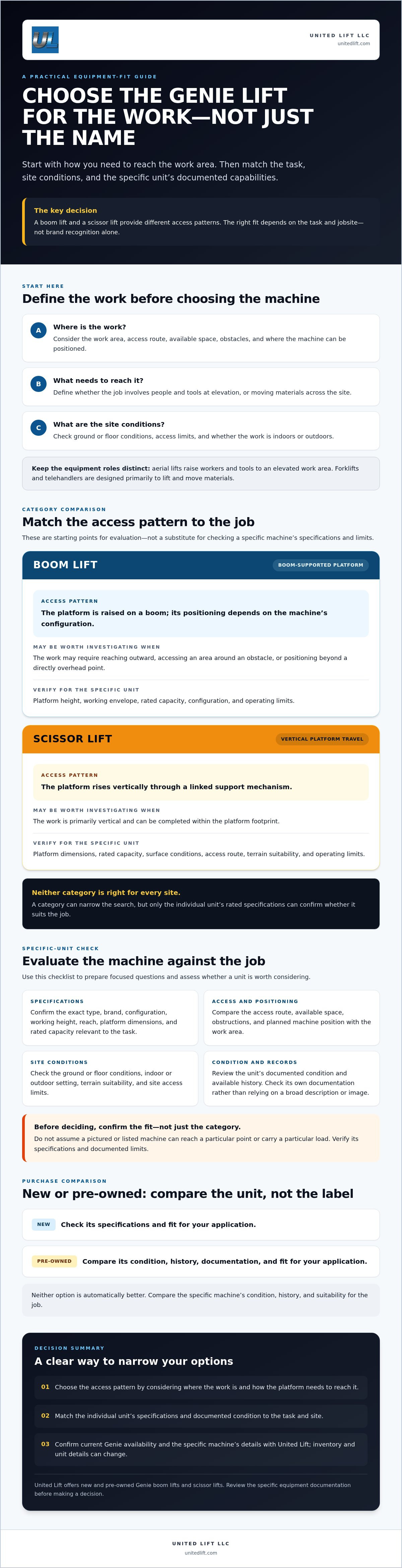
Start with how you need to access the work, then check whether a specific machine can handle it. A boom lift may be worth investigating if the platform needs to reach beyond a directly overhead position. A scissor lift may suit work that is primarily vertical and can be completed within the platform footprint. Neither category is right for every site.
| Category | Access pattern | Work area to assess | Questions to verify |
|---|---|---|---|
| Boom lift | Elevates a platform on a boom, with positioning determined by the unit’s configuration | Work that may require outreach or access around obstacles | What are the platform height, working envelope, rated capacity, and operating limits? |
| Scissor lift | Raises a platform vertically | Work that can be reached from the platform’s position | Do platform dimensions, capacity, surface conditions, and access route suit the task? |
When should buyers consider a Genie boom lift?
Ask whether the work area is directly above the machine’s planned position. If workers need to reach outward, reposition to access an area, or work around an obstacle, investigate boom lift configurations that may suit that access pattern. Consider the site layout, including obstructions, available space, and where the machine can be positioned.
Then compare the individual unit’s platform height, working envelope, and rated capacity with the job. Category guidance is only a starting point. Do not assume a listed or pictured machine can reach a particular point or carry a specific load without checking its documentation and limits.
When should buyers consider a Genie scissor lift?
Consider this category when workers need vertical access and can complete the task within the platform footprint. Measure the work area and access route, then verify that platform dimensions and rated capacity suit the people, tools, and materials involved. Assess floor or ground conditions and any restrictions on moving or positioning the lift.
A scissor lift is not automatically suitable for every indoor or outdoor setting. Check the specific unit’s terrain suitability and operating limits against the site conditions. For planning and safe use, consult the applicable OSHA safety regulations and the equipment documentation.
For any genie industries lift, exact reach, capacity, terrain suitability, and operating limits depend on the specific unit. Write down your access needs and site constraints before comparing equipment. To explore available Genie boom and scissor lifts, review United Lift equipment options, then confirm current availability and unit specifications directly.
How to Evaluate a Genie Lift for Your Worksite
Before comparing listings, turn the job into a clear equipment brief. A useful genie industries lift evaluation starts with the work and the space where it needs to happen, then checks each candidate against documented specifications. This makes it easier to ask focused questions and avoid choosing based on a model label alone.
- Define the task and working area. Record the work height, required reach, expected working duration, and the people, tools, or materials involved.
- Map the route and operating space. Note doorways, overhead obstructions, tight turns, the setup area, and other access restrictions.
- Describe the site conditions. Record floor or ground conditions, slopes or uneven surfaces, and whether the work is indoors or outdoors. Identify any site restrictions.
- Compare the brief with the exact unit. Check the machine’s specifications and operator documentation. Ask the site manager and equipment representative to clarify requirements that need confirmation.
Which jobsite details should you define first?
Be specific. “Work overhead” is less useful than identifying the required height, where the platform must be positioned, and the route to that point. Include expected use, available operating space, surface conditions, and whether the work is indoors or outdoors. Site rules or physical restrictions can narrow the options, so confirm them before settling on a machine category.
Which Genie lift specifications and records should you check?
Verify the exact model identity, rated capacity, platform dimensions, and operating limits in the unit’s documentation. For a pre-owned machine, request available condition details, maintenance records, and inspection documentation. Confirm what each record covers. A general listing description may not provide the unit-specific details your decision requires.
Also identify which safety requirements apply to your work and location. OSHA and ANSI/SAIA A92 requirements may need review. Confirm applicable requirements with qualified sources rather than assuming a listing or seller summary settles the question. Check that operator documentation is available and relevant to the specific machine.
For broader equipment evaluation principles, see this forklift buying guide. Bring your worksite notes and questions when discussing a lift, so the conversation can focus on fit, specifications, and records to verify.
New or Pre-Owned Genie Lift: What Should Buyers Compare?
Compare new and pre-owned equipment by looking at each specific unit against your work requirements and purchasing priorities. A new machine may suit a buyer seeking a particular configuration. A pre-owned lift may be worth considering when its documented condition and specifications meet the job. Neither option is automatically better, and pre-owned does not guarantee a lower overall cost.
For each candidate, compare:
- Specification fit: Does the unit meet the work height, access, capacity, and site requirements you identified?
- Condition and records: What is documented about the machine’s condition, maintenance, and inspections?
- Included items: Which accessories or components are included, and are they suitable for your intended use?
- Buyer priorities: Which factors matter most to your operation, such as equipment history, configuration, or purchasing approach?
Confirm current availability, whether the specific unit is new or pre-owned, its condition, included items, and transaction terms directly with the seller. A listing cannot replace unit-specific documentation and clear answers to your questions.
What should you verify before choosing a pre-owned Genie lift?
Ask for available maintenance, inspection, and ownership records for the specific machine. Request an explanation of how its condition and operating status were assessed, and confirm what the documentation does and does not establish. Check which accessories are included and ask the seller to identify any disclosed limitations. If key records or details are unavailable, account for that uncertainty rather than assuming you know the machine’s history.
Then compare its documented specifications with your job requirements. A pre-owned genie industries lift still needs to suit the work area, capacity needs, and site conditions. Confirm these details before moving forward.
How can financing fit into a lift purchase decision?
Financing can be part of the purchase discussion, but consider it alongside equipment fit and your business priorities. United Lift facilitates equipment financing. Ask which options are currently available, what eligibility requirements apply, and what terms are offered. Confirm availability and terms directly. Do not assume approval, rates, or tax outcomes without current, qualified information.
Ready to compare a specific unit with your requirements? Discuss Genie lift options and financing with United Lift, and confirm current inventory, equipment details, and applicable terms.
Explore Genie Lift Options Through United Lift
United Lift sells new and pre-owned lift equipment, including Genie-branded boom lifts and scissor lifts. The right option depends on your work and site details, as well as the specifications of the individual machine. Available Genie units, their condition, and equipment details can vary, so confirm them directly before making a decision.
What information should you prepare before contacting a seller?
A clear equipment brief makes it easier to discuss potential fits. Have these details ready:
- Task and access: Describe the work, required height and reach, access route, and space available to position and operate the lift.
- Site conditions: Note the surface, indoor or outdoor use, and any restrictions that could affect equipment selection.
- Purchase preference: Say whether you’re considering new, pre-owned, or both. For a pre-owned unit, identify which maintenance, inspection, or other records you want to review.
- Questions to resolve: Ask about the exact unit’s specifications, current availability, documented condition, included items, and transaction terms.
- Financing: If relevant, ask which financing options are currently available and what terms and eligibility requirements apply.
Specifics help. Instead of asking only for a “Genie lift,” explain whether the job calls for a boom lift or scissor lift and why. That gives the seller a basis to discuss options in relation to the work. You can then verify the actual unit’s documentation and limits.
How can United Lift help you take the next step?
United Lift serves equipment buyers nationally and sells new and pre-owned equipment, including Genie-branded boom lifts and scissor lifts. Contact the company to ask about Genie equipment currently available and discuss whether an option aligns with your stated requirements. If a particular unit is unavailable or does not match the task, ask about other equipment options that may fit.
For any genie industries lift you’re considering, confirm availability, whether it’s new or pre-owned, its condition, specifications, and supporting documentation. United Lift facilitates equipment financing, but options and terms should be confirmed directly. Bring your work and site notes to the conversation, then review the details before deciding.
Discuss Genie lift options with United Lift.
Make Your Next Lift Decision with Confidence
The right Genie lift starts with the job, not the name. Match boom lift or scissor lift access to your work area, then check the specific machine’s capacity, dimensions, condition, and operating limits against your site requirements.
Whether you’re considering new or pre-owned equipment, review the unit’s details and documentation before deciding. A genie industries lift may be worth exploring if its specifications fit your task, but availability and condition vary by unit.
United Lift sells new and pre-owned equipment, including Genie among its brands, and facilitates financing options for business customers. Ask directly about current Genie equipment, its specifications and condition, and available financing terms.
Discuss Genie lift options with United Lift and take the next step toward equipment that fits your work. A clear list of job requirements will help you start the conversation.
Frequently Asked Questions
What is a Genie Industries lift?
A Genie lift is aerial work equipment sold under the Genie brand. The term can refer to different categories, including boom lifts and scissor lifts, so it does not identify one specific machine. The phrase “genie industries lift” alone cannot tell you whether equipment suits your job. Before buying, confirm the exact unit, specifications, condition, and intended application with the seller. Do not rely on brand name alone to judge suitability.
What is the difference between a Genie boom lift and a Genie scissor lift?
A boom lift uses a boom to position its work platform, while a scissor lift raises its platform vertically. The better category for a job depends on the access route, work area, task, and site conditions. Compare the specific machine’s rated capacity, operating limits, and documentation before deciding. Neither type is right for every elevated task, so assess the work and the actual unit rather than relying on category alone.
How do I choose the right Genie lift for my job?
Start by defining the task, required working area, access limitations, and floor or ground conditions. Consider whether a boom lift’s positioning or a scissor lift’s vertical access better matches the work. Then compare your requirements with the exact unit’s specifications and operator documentation. Ask the seller to confirm suitability and current availability. Do not infer a machine’s reach, capacity, or performance from its brand or general product category.
Are Genie lifts available new and used?
Genie equipment may be available new or pre-owned, but inventory changes, so confirm the status of the specific unit. United Lift sells new and pre-owned equipment, including Genie-branded boom lifts and scissor lifts. Ask whether a unit is currently available, how its condition is described, and what maintenance or inspection records can be provided. Verify the details directly with the seller before relying on a listing or making a purchase decision.
What should I check before buying a used Genie lift?
Confirm the exact unit identity and specifications, then request available condition details, maintenance history, and inspection documentation. Ask how the machine’s condition and operating status were assessed. Check which accessories or other items are included, ask about disclosed limitations, and review the sale terms. Have qualified personnel assess the unit against your application and applicable requirements. Documentation varies by machine, so verify the information for the specific lift with the seller.
Does United Lift offer financing for Genie lifts?
United Lift facilitates equipment financing for business customers. Available options, eligibility requirements, and terms may depend on the buyer and transaction, so ask United Lift what arrangements are currently available. Review the applicable terms with the relevant financing provider before deciding. Do not assume approval, a particular rate, or specific tax treatment without confirming current details with qualified sources. Include financing questions alongside equipment-fit and availability checks.
Does United Lift rent Genie lifts or provide operator training?
No. United Lift sells equipment and does not offer short-term equipment rentals or certified operator training. Buyers interested in purchasing a Genie lift can contact the company to ask about current new and pre-owned equipment options and confirm unit details. If you need a rental, training, or another service, contact a provider that specifically offers it. Verify that provider’s qualifications, availability, and terms directly before making arrangements.
- Tags: aerial work platforms, boom lifts, construction machinery, equipment buying guide, genie industries lift, Genie lift, heavy equipment, scissor lifts
