
The Best Forklift for Asphalt: Balancing Traction, Weight, and Surface Protection
Posted by United Lift LLC on
Is your heavy equipment slowly destroying your most expensive outdoor asset? If you’ve ever seen deep ruts or surface scarring on your lot after a busy shift, you know that asphalt requires a specific approach. Finding the best forklift for asphalt isn't just about how much weight you can move; it's about how that weight meets the ground. Standard warehouse units with cushion tires often struggle with traction or sink into the surface during a summer heatwave. You need a machine that balances power with a light footprint.
We understand the frustration of maintaining a professional facility while keeping operations moving at full speed. You want equipment that transitions seamlessly from the warehouse to the loading dock without leaving a trail of damage behind. In this guide, we'll show you which tire configurations and models from brands like Toyota and Caterpillar offer the best protection for your pavement. You'll discover how pneumatic tires and smart weight distribution can improve operator safety on wet surfaces and prevent costly repairs. Let's find the durable solution that keeps your asphalt intact and your team productive.
Key Takeaways
- Learn why air-filled pneumatic tires are the superior choice for cushioning heavy loads and protecting asphalt from point-loading damage.
- Identify why Hyster and Yale models are frequently cited as the best forklift for asphalt when working on outdoor grades and uneven surfaces.
- Master the "Three S's" of operation, including Speed, Steering, and Staging, to prevent surface scarring and extend the lifespan of your pavement.
- Understand the critical role of specialized stability systems in maintaining operator safety during transitions between indoor and outdoor environments.
- Discover how to leverage national financing and high-quality pre-owned inventory to upgrade your fleet with asphalt-safe equipment.
Why Asphalt Lots Require Specialized Forklift Specifications
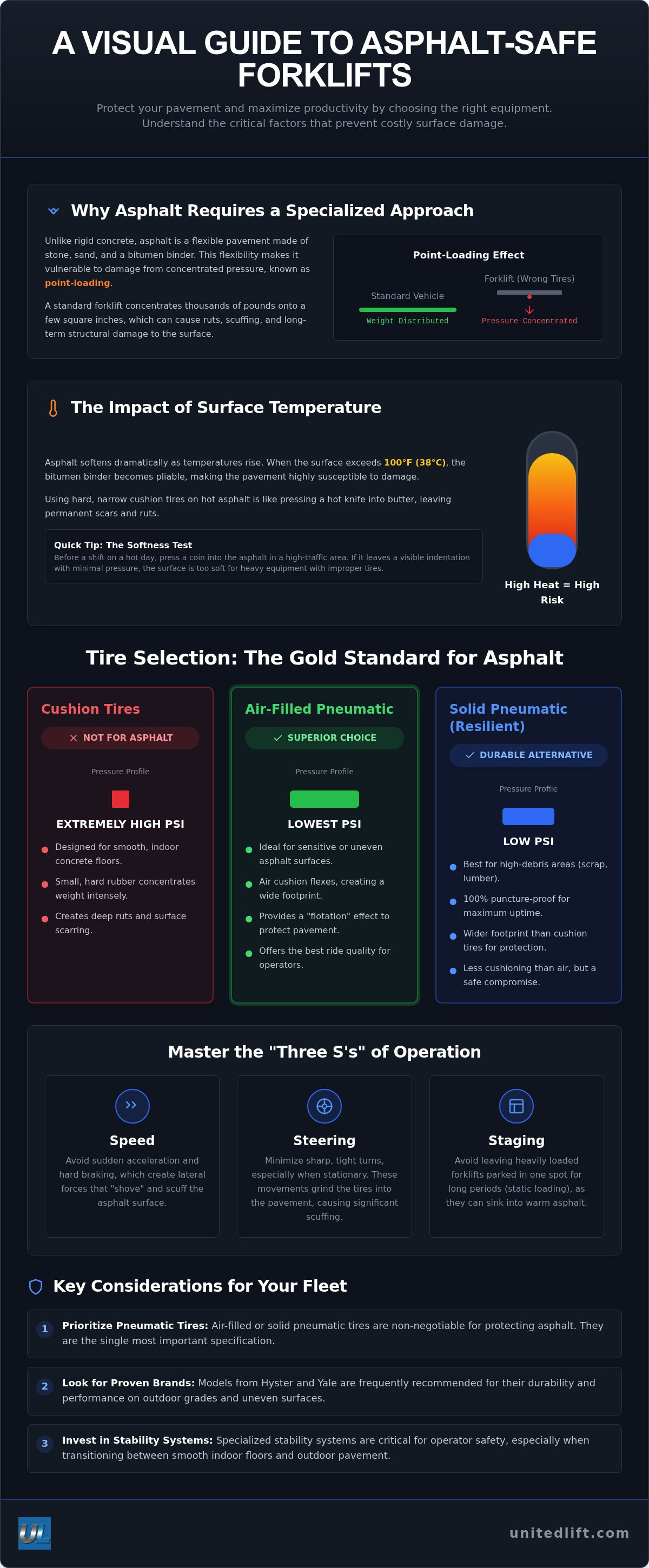
Asphalt is a flexible pavement. It's composed of stone, sand, and a bitumen binder that holds everything together. Unlike rigid concrete, asphalt moves and responds to pressure. When you operate a forklift on this surface, you aren't just driving; you're applying massive pressure to a very small area. This is known as point-loading. A standard passenger vehicle spreads its weight across wide, flexible tires. A forklift concentrates thousands of pounds onto a few square inches. Without the right specifications, your lot will suffer from deep ruts, surface scuffing, and structural "bleeding." Finding the best forklift for asphalt starts with understanding these physical limits. Pneumatic tires are the non-negotiable standard for this surface. They provide a wider footprint that spreads the load and prevents the machine from sinking into the subbase.
The Impact of Surface Temperature on Asphalt Durability
Asphalt softens significantly as temperatures climb. Once the surface exceeds 100 degrees Fahrenheit, the bitumen binder becomes pliable. In many regions, direct summer sun can push pavement temperatures much higher than the ambient air temperature. Using cushion tires during these peaks is a mistake. These hard, narrow tires act like a hot knife through butter, leaving permanent scars in the soft lot. Before you start your shift, try a simple softness test. Press a coin or a screwdriver into the surface in a sunny, high-traffic area. If it leaves a visible indentation with minimal pressure, the lot is too soft for heavy equipment. Choosing the best forklift for asphalt means prioritizing pneumatic tires that can handle these temperature swings without digging in.
Static vs. Dynamic Loading on Paved Surfaces
Damage occurs through two different types of stress: static and dynamic. Static loading happens when a machine sits in one spot. A heavily loaded forklift can actually sink into warm asphalt over a single lunch break. Dynamic loading refers to the stress of movement. Tight turns and sudden braking create lateral forces that "shove" the asphalt layers. This leads to scuffing and washboarding over time. Concrete can handle these localized stresses because of its rigid internal structure. Asphalt relies on the flexibility of its layers, which makes it vulnerable to sharp movements. To maintain your facility, you need equipment designed to minimize these impacts. We recommend pneumatic-tired models from brands like Hyster or Yale. These machines offer better weight distribution and shock absorption than their warehouse counterparts.
Pneumatic vs. Solid Pneumatic Tires: The Asphalt Gold Standard
Tires are your lot's first line of defense. Standard cushion tires are designed for the smooth, hard floors of an indoor warehouse. They fail on asphalt. Because cushion tires are small and made of hard rubber, they concentrate the entire weight of the machine into a tiny contact patch. This creates high pressure that leads to ruts. To find the best forklift for asphalt, you must look at pneumatic options. These tires have a larger diameter and a wider footprint. This design distributes the machine's weight over a greater surface area, significantly reducing the pounds per square inch (PSI) exerted on your pavement. Proper tire selection ensures your equipment moves efficiently without leaving a permanent trail of damage behind.
Air-Filled Pneumatic Tires for Maximum Cushioning
Air-filled pneumatic tires offer a "flotation" effect that is ideal for sensitive asphalt surfaces. Since they are filled with compressed air, the tire carcass can flex and expand under the weight of a load. This expansion increases the size of the footprint. It's the most effective way to prevent point-loading. For a standard 5,000 lb capacity forklift, keeping your tires at the manufacturer's recommended pressure, often around 100 PSI, is critical. Under-inflated tires cause the sidewalls to work too hard, while over-inflation rounds the tread and increases surface pressure. These tires provide the best ride quality for your operators, though they do carry a risk of punctures from nails or sharp debris. If your lot is clean and well-maintained, air-filled pneumatics are the superior choice for surface protection.
Solid Pneumatic Tires for High-Debris Environments
If your facility handles scrap metal, lumber, or construction materials, air-filled tires might lead to constant downtime from flats. Solid pneumatic tires, also known as resilient tires, are the solution. These are not filled with air; instead, they are constructed from multiple layers of specialized rubber compounds. They provide the puncture protection of a cushion tire with the profile and footprint of a pneumatic. When deciding between Solid Pneumatic or Press-On Forklift Tires, remember that solids are heavier than their air-filled counterparts. This extra weight increases the overall mass of the forklift, which slightly raises the pressure on the asphalt. However, they remain a "hybrid" gold standard for rugged outdoor work. They offer a balance of durability and surface safety that warehouse tires simply cannot match.
Choosing the right tire configuration is the most important step in protecting your facility investment. If you're ready to see how these different options feel in the seat, you can browse our current inventory of pneumatic forklifts to find the right fit for your specific lot conditions.
Top Forklift Models for Asphalt and Outdoor Applications
Selecting the best forklift for asphalt requires looking beyond simple lift capacity. You need a machine designed to survive the elements while respecting your pavement. Brands like Hyster, Yale, Toyota, and Caterpillar dominate this space because they prioritize durability and weight distribution. We see many businesses struggle with standard warehouse units that overheat or lose traction outdoors. Investing in a purpose-built pneumatic model prevents these operational headaches. Whether you're looking at new equipment or high-quality pre-owned inventory, focusing on these specific outdoor-rated series will protect your lot and your bottom line.
Internal Combustion (IC) Powerhouses for All-Day Use
For operations that run multiple shifts, internal combustion engines remain the primary choice. The Hyster H50-70FT series is a standout for asphalt work. These machines feature advanced cooling systems that prevent overheating during long summer shifts on hot pavement. Liquid Propane Gas (LPG) is the preferred fuel source for most facilities. It provides the power needed for outdoor grades while remaining clean enough for occasional indoor transitions. Caterpillar also offers rugged outdoor-rated drivetrains that handle the vibrations of uneven asphalt without premature wear. These IC models provide the consistent torque necessary for heavy loading on outdoor docks.
The Rise of Electric Pneumatic Forklifts
Don't believe the myth that electric forklifts can't handle outdoor work. Modern electric pneumatics, like the Yale ERP series, are engineered with weather-protected electronics. These machines are perfect for eco-friendly lots that need to minimize noise and emissions. One major advantage is the maintenance savings. Electric motors have fewer moving parts than IC engines, which is a huge benefit in dusty outdoor environments where grit can chew through traditional filters and belts. They offer precise control and immediate torque, making them surprisingly capable on asphalt inclines.
Model Comparison: Asphalt Compatibility
| Model Series | Tire Type | Key Feature | Ideal Asphalt Use Case |
|---|---|---|---|
| Toyota 8-Series | Pneumatic | SAS Stability | Navigating outdoor grades and slopes safely. |
| Hyster Fortis | Pneumatic | DuraMatch Trans | High-heat environments and heavy-duty loading. |
| Caterpillar GP/DP | Pneumatic | Rugged Drivetrain | Debris-heavy lots and construction site paths. |
The Hyster pneumatic series remains the most versatile choice for the best forklift for asphalt due to its balance of cooling efficiency and surface-friendly weight distribution.
Operational Best Practices to Prevent Asphalt Damage
Even if you invest in the best forklift for asphalt, your operators hold the key to pavement longevity. High-quality pneumatic tires reduce pressure, but aggressive driving can still tear the surface. We teach our clients the "Three S’s" of asphalt operation: Speed, Steering, and Staging. By following these simple rules, you can avoid the localized stress that leads to costly resurfacing projects. Consistent training is the most effective way to protect your facility investment while maintaining a fast-paced workflow.
Dry steering is the leading cause of asphalt scuffs. This occurs when an operator turns the steering wheel while the forklift is completely stationary. The twisting motion of the tire grinds directly into the asphalt binder, especially on hot days. It's a quick way to turn a smooth lot into a mess of "alligator" cracks. Operators should always have the machine in slight motion before beginning a turn. This allows the tire to roll over the surface rather than grinding into it like an industrial sander.
Safe Maneuvering on Paved Lots
Precise movement is about minimizing friction. Follow these steps to keep your lot in top shape:
- Avoid tight turns: Zero-radius turns cause "tire scrubbing." This lateral force pushes the asphalt aggregate out of place and creates permanent scars.
- Maintain low speeds: High-speed operation generates internal tire heat. This heat transfers to the asphalt, making the bitumen more susceptible to rutting.
- Use wide arcs: Whenever your facility layout allows, take the widest path possible. This distributes the weight and lateral force across a larger area of the lot.
Staging and Parking Protocols
Where you park matters as much as how you drive. Asphalt is a flexible material that can develop "memory" ruts under constant pressure. Never park your forklifts in the exact same spot every day. Over time, the static weight will create permanent depressions that collect water and lead to potholes. If you must store a machine on asphalt for an extended period, use spreader plates or thick wood blocks under the tires to increase the footprint and reduce the PSI.
Additionally, keep a close eye on fluid levels. Hydraulic oil and motor oil act as solvents for asphalt. A small leak can dissolve the bitumen binder in hours, leaving you with a soft, crumbly patch of loose stone. Clean any spills immediately with an asphalt-safe degreaser to stop the chemical reaction. Before every shift, operators should verify tire pressure matches the manufacturer’s spec and inspect treads for embedded metal shards that could gouge the lot. Finding the best forklift for asphalt is only half the battle; proper maintenance and operation do the rest.
If a mechanical failure occurs or a machine needs to be moved quickly to prevent surface damage, you can visit Johnson's Towing LLC for 24/7 emergency towing and roadside assistance in Northern Virginia.
Need a machine that offers better maneuverability for your tight asphalt lot? Browse our inventory of compact pneumatic forklifts to find the perfect fit for your operation.
How to Secure the Right Forklift for Your Fleet
Choosing the right equipment is a high-stakes decision for your facility. You need to balance the initial purchase price with the long-term cost of pavement maintenance. In many cases, the best forklift for asphalt for your specific operation might be a high-quality used model. Since outdoor work is naturally harder on machinery, a pre-owned unit allows you to secure a premium brand like Hyster or Yale at a fraction of the cost of new equipment. This approach frees up capital for other facility upgrades while still providing the pneumatic tire protection your lot requires. United Lift LLC is here to help you navigate these choices with expert advice and a massive inventory of field-tested machines.
Navigating Used Inventory for Asphalt Success
When you browse used inventory, focus on two critical areas: mast wear and tire condition. For asphalt applications, ensure the pneumatic tires have deep tread to maintain traction on oil-slicked or wet surfaces. The pre-owned Hyster and Yale units at United Lift LLC are specifically selected for their outdoor durability. They often come equipped with the heavy-duty cooling systems and wider footprints necessary to handle the heat and pressure of paved lots. For a deeper dive into making the right purchase for your business, check out The Ultimate Forklift Buying Guide for Industrial Success in 2026.
Financing and National Availability
We make the acquisition process as simple as possible. Whether you need a single machine or a full fleet, United Lift LLC facilitates national financing and leasing options to fit your budget. Leasing is an excellent strategy for businesses with seasonal asphalt use. It allows you to scale your fleet during peak summer months without a permanent capital commitment. We serve customers across the country and remain available 7 days a week for support, ensuring your operations never skip a beat. Our goal is to be a reliable partner that understands the urgency of your material handling needs.
Don't guess which machine weight is safe for your specific lot. Every asphalt surface has different load-bearing limits based on its thickness and subbase. We recommend a professional consultation to match your required lift capacity with a machine that won't exceed your lot's PSI threshold. Our experts can help you compare the ground pressure of different models to find the best forklift for asphalt that fits your site. Reach out to the team at United Lift LLC today to find an asphalt-ready forklift that protects your facility and keeps your team moving safely.
Protect Your Pavement and Your Productivity
Protecting your facility’s pavement is a long-term investment that starts with the right equipment choices. You now understand that the best forklift for asphalt relies on pneumatic tires to distribute weight and prevent deep ruts during high-heat months. Selecting a durable model from a trusted brand like Hyster, Yale, or Toyota ensures your fleet can handle the transition from indoor docks to outdoor lots without missing a beat. Remember that your operators are your first line of defense; following best practices for steering and staging will keep your asphalt smooth and professional.
As an authorized dealer for Hyster, Yale, and Toyota, United Lift LLC provides the expertise you need to make a confident purchase. We offer national shipping and competitive financing options to help you secure high-value machinery quickly. Our support team is available 7 days a week to assist with your inquiry. Browse our inventory of asphalt-ready pneumatic forklifts today and find the perfect match for your lot. Let’s get your team moving safely on a surface that’s built to last.
Frequently Asked Questions
Can I use a cushion tire forklift on an asphalt parking lot?
You should avoid using cushion tire forklifts on asphalt surfaces. These tires are made of hard rubber and have a small contact patch that creates intense pressure on the pavement. On warm days, this leads to permanent scuffs or ruts. For outdoor lot protection, a pneumatic tire setup is the industry standard to ensure the weight is distributed safely across the flexible asphalt surface.
What is the best tire pressure for a forklift operating on asphalt?
Most 5,000 lb capacity pneumatic forklifts require a tire pressure of approximately 100 PSI. However, you must always verify the specific rating printed on the tire sidewall or the manufacturer's data plate. Maintaining correct pressure is vital for the best forklift for asphalt performance, as under-inflated tires increase heat and friction, while over-inflation reduces the footprint and increases ground pressure on the lot.
Why does my forklift leave black marks or ruts on the asphalt?
Black marks and ruts are typically caused by "dry steering" or excessive surface heat. When an operator turns the wheels while the machine is stationary, the friction grinds the rubber into the bitumen binder. Additionally, if the asphalt temperature exceeds 100 degrees Fahrenheit, the surface softens, making it vulnerable to the high concentrated weight of the forklift. Transitioning to wider pneumatic tires helps mitigate this damage.
Are electric forklifts safe to use outdoors on asphalt in the rain?
Modern electric forklifts are safe for outdoor use in the rain if they feature an appropriate Ingress Protection (IP) rating. Models like the Yale ERP series are specifically engineered with weather-protected electronics and sealed controllers to handle wet conditions. While they are safe to operate on wet asphalt, operators should reduce speeds to maintain traction and prevent hydroplaning on slick surfaces during outdoor transitions.
How much does a pneumatic tire forklift cost compared to a cushion tire model?
Pneumatic tire forklifts generally carry a higher purchase price than cushion tire models. This cost difference is due to the larger chassis, increased ground clearance, and the specialized construction of the tires themselves. While the initial investment is higher, the long-term savings in asphalt repair and the ability to work in versatile outdoor environments often justify the extra expense for most facility managers and lot owners.
What is the weight limit for a forklift on standard 4-inch asphalt?
Standard 4-inch asphalt can typically support a 5,000 lb capacity forklift, provided the subbase is well-compacted. However, the total weight of the machine plus the load often exceeds 15,000 lbs, which can test the limits of the pavement. Always consult with a paving professional to determine your lot's specific load-bearing capacity before operating heavy machinery to prevent structural failure or deep rutting in high-traffic areas.
Do I need a rough terrain forklift if my lot is paved with asphalt?
You generally do not need a rough terrain forklift if your lot is fully paved with asphalt. A standard pneumatic forklift provides sufficient traction and ground clearance for most paved outdoor applications. Rough terrain models are designed for unpaved surfaces like loose dirt or gravel and are often too heavy and bulky for standard asphalt maintenance, potentially causing unnecessary wear on the paved sections of your facility.
How often should I replace pneumatic tires when working on asphalt?
You should inspect your pneumatic tires daily and plan for replacement when the tread depth reaches the manufacturer's wear limit. Asphalt is an abrasive surface that wears down rubber faster than smooth warehouse floors. Operating with bald tires reduces traction on wet lots and increases the risk of punctures. Regular replacement ensures your machine remains the best forklift for asphalt by maintaining a safe, stable footprint for your loads.
- Tags: Asphalt Maintenance, best forklift for asphalt, Forklift, Heavy Equipment, Outdoor Forklifts, Pavement Protection, Pneumatic Tires, Warehouse Safety
