
New vs. Used Forklift Cost: 2026 Price and ROI Comparison
Posted by United Lift LLC on
Did you know that the initial purchase price of a forklift accounts for only about 20% of its total cost of ownership over its lifespan? It's a staggering figure that forces a rethink of your entire warehouse budget. We understand the pressure of rising equipment prices and the nagging fear that a "bargain" used machine will eventually fail you during a peak shift. Comparing the new vs used forklift cost involves much more than just the upfront check you write today. It's about balancing capital expenditure against the long-term reliability your facility demands.
You need a strategy that secures high uptime while squeezing every possible cent out of your 2026 tax deductions. We're here to help you navigate these choices with confidence. This comparison breaks down how to maximize your ROI by looking at the full picture of machine life cycles. We will examine the 2026 Section 179 deduction limit of $2,560,000 and the 100% bonus depreciation rules that apply to both new and pre-owned equipment. By the end of this guide, you'll know exactly which path offers the best financial protection for your specific operation.
Key Takeaways
- Understand 2026 market rates to see why used forklifts can offer significant savings at 40% to 60% of the cost of new models.
- Evaluate the new vs used forklift cost beyond the sticker price by accounting for the steep depreciation curve of new equipment.
- Navigate the 2026 Section 179 tax rules to maximize your deduction on qualifying machinery before the year-end deadline.
- Match your equipment choice to your facility's workload using a simple operational framework based on weekly engine hours.
- See how financing facilitates immediate fleet upgrades while keeping your capital liquid for other business needs.
New vs. Used Forklift Price Comparison: 2026 Market Rates
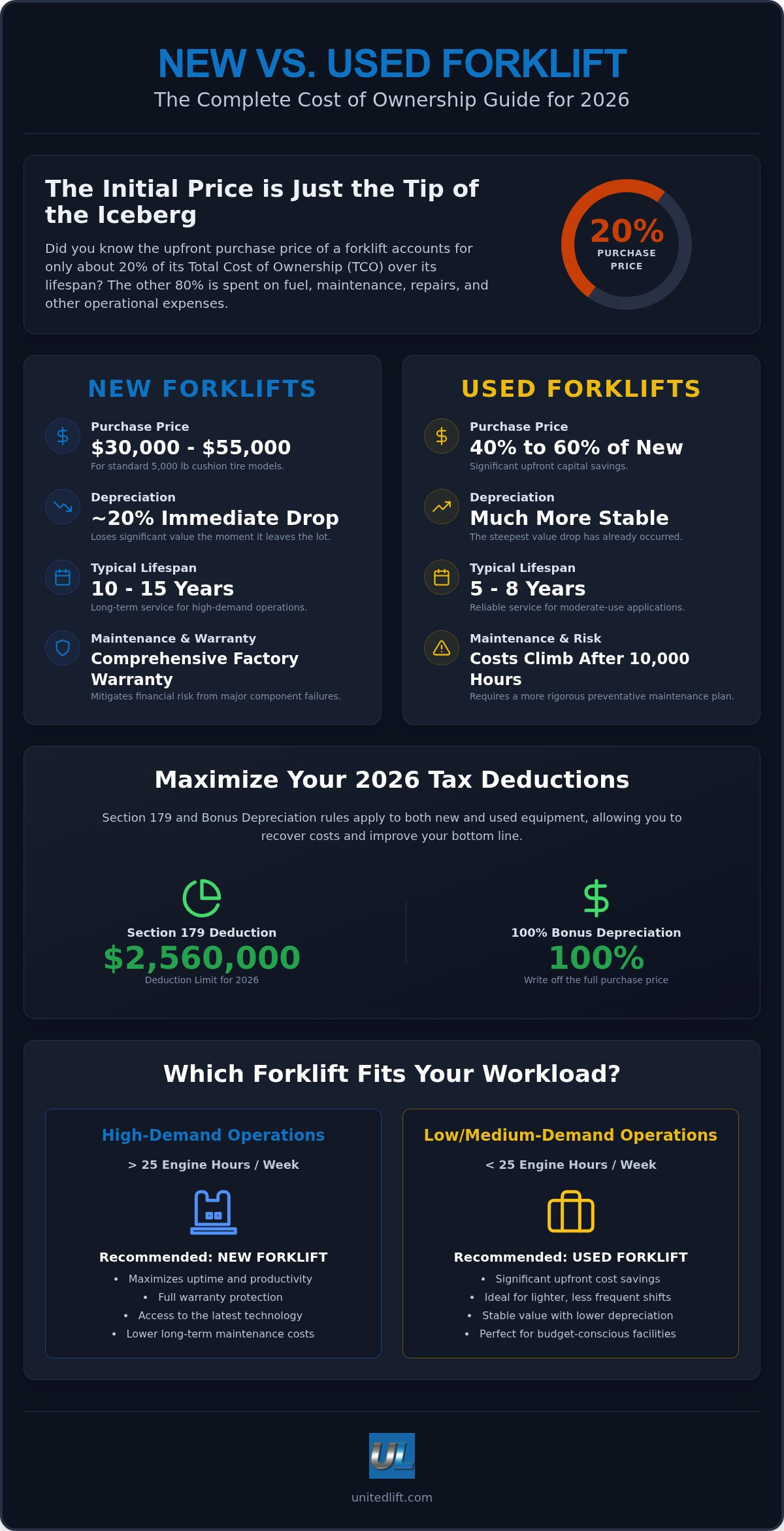
Finding the right balance between your operational needs and your budget starts with a clear look at the 2026 market. For a standard 5,000 lb cushion tire model, you can expect new prices to typically range from $30,000 to $55,000. If you look at the pre-owned market, used forklifts generally sell for 40% to 60% of the cost of a new model. This percentage fluctuates based on the machine's engine hours and overall condition. When calculating the new vs used forklift cost, keep in mind that electric models often require a higher initial investment but pay off with significantly lower fuel expenses over time. For those with heavy-duty needs, specialized equipment like telehandlers or high-capacity diesel lifts can easily exceed $100,000 when bought new.
A Forklift is more than just a piece of warehouse machinery; it's the backbone of your logistics. Choosing between new and used depends on how much work you have. High-demand environments usually justify the premium of a new machine. On the other hand, a well-maintained used unit can handle lighter shifts without the heavy sticker price. It's all about matching the tool to the task.
Brand-Specific Pricing Expectations
Brand reputation plays a massive role in what you'll pay. Premium brands like Toyota and Hyster maintain much higher resale values in the used market because of their track record for durability. If you're on a tight budget, economy lift solutions provide the lowest entry point. These are perfect for low-hour applications where you don't need a heavy-duty workhorse. Fortunately, 2026 has brought some relief to buyers. Supply chain stabilization has finally shortened lead times and helped level out sticker prices across the board. You won't have to wait months for a new unit like you did in previous years. It's a great time to browse current inventory and see what's ready for immediate delivery.
The "Hidden" Costs of Acquisition
The sticker price is rarely the final number on your invoice. You need to account for national shipping and delivery logistics, especially for large industrial machinery. These costs vary based on your location and the size of the equipment. Don't forget about initial safety inspections and operator familiarization. It's essential to ensure your team is ready to use the new asset safely from day one. Finally, consider the impact of attachments. Adding features like side shifters or specialized clamps will increase the final new vs used forklift cost. These tools improve efficiency, but they do come with their own price tag. Plan for these extras so you aren't surprised when it's time to sign the paperwork.
Total Cost of Ownership (TCO): Beyond the Sticker Price
Calculating the true new vs used forklift cost requires looking far past the initial purchase price. A new machine loses about 20% of its value the moment it's delivered to your site. It's a steep drop that many buyers fail to account for in their initial budget. Pre-owned units have already cleared this steepest part of the depreciation curve. They offer a much more stable value over the first few years of your ownership. Savvy fleet managers often prefer used equipment for this exact reason. While a new lift might serve your facility for 10 to 15 years, a used one typically provides 5 to 8 years of reliable service. You're trading long-term longevity for immediate capital savings and lower depreciation hits. Leveraging Section 179 of the tax code can help you recover these costs even faster by writing off the full purchase price in 2026.
The Cost of Downtime
Downtime is the hidden profit killer in any warehouse. New equipment includes comprehensive factory warranties that act as a safety net for your operations. If a major component fails, the manufacturer covers the repair, which mitigates your financial risk. Used machinery doesn't always offer that luxury. You'll likely see maintenance costs for used equipment begin to climb significantly after the 10,000-hour mark. To ensure high uptime, you must commit to a more rigorous preventative maintenance schedule. Think about your busiest shift. If your primary lift goes down for even three hours, what does that cost you in missed shipments? For many high-volume facilities, that single hour of lost productivity is worth more than the monthly payment on a new machine. If you want to see how different models compare, browsing our current inventory is a great way to evaluate your options.
Fuel and Energy Efficiency
Energy expenses are the next major factor in your TCO. New electric forklifts feature advanced battery technology that reduces charging costs and extends shift life. These units slash your daily operational expenses compared to older, less efficient models. If you choose internal combustion (IC) models, your upfront investment is lower, but you'll face higher recurring fuel bills and more frequent engine service. You also need to budget for industrial batteries. A high-quality battery for an electric lift is a major investment that must be factored into the long-term cost. In 2026, the gap between electric and IC operating costs continues to widen. Choosing the right power source is just as important as the purchase price when you're trying to maximize your 2026 budget.
The 2026 Section 179 Advantage for Forklift Buyers
Section 179 is a game changer for your 2026 bottom line. It allows you to deduct the full purchase price of your equipment in the first year rather than depreciating it over time. For many businesses, this significantly shifts the new vs used forklift cost calculation. Instead of spreading the cost over several years, you get the tax relief right now when you need it most. The maximum deduction for 2026 is $2,560,000. This comes with a spending cap of $4,090,000. These limits were solidified by the "One Big Beautiful Bill Act" (OBBBA) in 2025. If you're planning a larger fleet expansion, 100% bonus depreciation remains a powerful tool to further lower your tax liability.
Crucially, this benefit isn't just for brand-new machinery. Used forklifts qualify for the Section 179 deduction as long as they are "new to you." This means you can buy a high-quality pre-owned Hyster or Yale and still write off the entire investment. It's a massive advantage for companies trying to scale without draining their cash reserves. It levels the playing field for used equipment. You get the same tax shield as a new machine but for a fraction of the upfront capital. This makes the used market incredibly attractive for growing businesses that want to maximize their 2026 budget.
Maximizing the "Net Cost" of Used Equipment
Let's look at the math. A used $25,000 forklift can effectively cost much less after a 35% tax bracket deduction. Your actual out-of-pocket expense drops because of the tax savings. Used equipment often provides a faster path to being "tax-positive" because the initial investment is lower to begin with. You're effectively getting a discount from the government for investing in your business infrastructure. This strategy works exceptionally well for companies with medium-intensity needs. For more details on choosing the right model, check out The Ultimate Forklift Buying Guide for Industrial Success in 2026.
Compliance: The "Placed in Service" Rule
You must follow the timing rules to secure these benefits. Equipment must be on-site and operational by midnight, December 31, 2026. Merely paying for the lift isn't enough. It has to be ready to work. This is why national shipping speed matters when you're making year-end purchases. If your lift arrives on January 2nd, you've missed the window for the 2026 tax year. Waiting until the last week of December to order can be risky. Plan your acquisition early to ensure the machinery is on your floor and functional before the clock strikes twelve. We always recommend consulting a CPA to finalize your specific tax shield strategy. They'll ensure your acquisition aligns with current IRS regulations so you can maximize your ROI without any surprises.
When to Choose New vs. Used: An Operational Framework
Deciding between a new or pre-owned machine comes down to your weekly engine hours. High-intensity operations demand new machinery. If your facility runs 40 or more engine hours per week, the reliability of a factory warranty is essential. Downtime on a primary lift during a peak shift can cost more than the price gap between a new and pre-owned unit. For medium-intensity applications, typically 15 to 25 hours per week, high-quality used equipment from brands like Hyster or Yale is ideal. These units offer the durability you need without the steep depreciation of a brand-new model. If your lift only sees occasional use under 15 hours per week, economy used lifts provide the best value-to-utility ratio. You get the job done for a fraction of the new vs used forklift cost associated with a showroom model.
Specialized applications often force a move toward new equipment. While the used market is vast, finding a specific configuration with custom mast heights or unique hydraulic attachments can be difficult. If your warehouse requires a triple-stage mast with a specific collapsed height or integrated side-shifting fork positioners, ordering new ensures the machine meets your exact specifications from day one. This precision prevents the need for costly aftermarket modifications that can void warranties or compromise safety. If you need a specific setup, browsing our current inventory can help you see which configurations are ready for immediate national shipping.
Evaluating Used Forklift Condition
Don't let a fresh coat of paint fool you when inspecting pre-owned units. You must look at the hour meter readings and perform thorough hydraulic leak checks. Mast integrity is another non-negotiable factor; any signs of warping or excessive wear in the channels can lead to safety risks. Buying from a national dealer is significantly safer than private party transactions. Dealers provide a documented maintenance history, which is vital for your own records and future resale value. A well-documented machine is always easier to trade in when it's time for an upgrade. We ensure every unit in our inventory meets rigorous standards so you can buy with total confidence.
Technology and Safety Requirements
Modern warehouses are increasingly data-driven. New models offer the latest operator sensing technology and ergonomic improvements that reduce driver fatigue. These features often include integrated telematics and fleet management software that help you track efficiency in real-time. Used models can still be productive, but they may require aftermarket safety upgrades to meet modern standards. This extra investment should be factored into your total new vs used forklift cost analysis. If your facility relies on strict safety protocols or automated tracking, the built-in tech of a new lift often justifies the higher initial price. You aren't just buying a lift; you're buying a safer and more efficient workflow for your entire team.
Financing Your Fleet: Making the Numbers Work
Financing isn't just about spreading out payments. It's a strategic tool that allows you to take the full Section 179 deduction while keeping your cash in the bank. When you finance a purchase, you can claim the entire cost of the equipment on your 2026 taxes, even if you've only made a few monthly payments. This approach is vital when analyzing the new vs used forklift cost for your facility. It turns a large capital expenditure into a manageable monthly operating expense without sacrificing your tax shield.
This creates what we call the "Cash Positive" scenario. In many instances, the tax savings you receive in the first year actually exceed the total amount of your finance payments for that same period. You essentially improve your cash position by upgrading your fleet. United Lift LLC facilitates financing for both new and pre-owned industrial vehicles, ensuring you get the best terms regardless of your equipment choice. Lease-to-own options also provide a perfect middle ground for businesses that need to manage fluctuating capital throughout the year.
National Inventory and Delivery
United Lift LLC offers a broad selection of premium brands, including Hyster, Yale, Toyota, and Caterpillar. Our national reach means we provide support that keeps your machinery operational regardless of your location. You don't have to worry about regional shortages or limited choices. However, timing is everything. The year-end inventory rush is a real challenge as companies race to secure their 2026 tax benefits. Securing your fleet early ensures your equipment arrives and is functional before the deadline.
Next Steps: Get a Quote
Ready to see the numbers for yourself? Contact our team for a no-nonsense evaluation of your material handling needs. We'll help you compare specific new and used units side-by-side in our current inventory so you can see the real-world new vs used forklift cost for your specific application. Don't leave your 2026 tax strategy to chance. Partner with a reliable expert to find the equipment that maximizes your budget and keeps your warehouse moving at full speed.
To find out how you can further optimize your business operations and equipment management, read more about the specialized support available to growing enterprises.
Maximize Your 2026 Fleet Efficiency
Choosing the right equipment is about more than just the sticker price. It's a strategic move to protect your cash flow while ensuring your crew has the tools they need. By balancing immediate capital savings with the 2026 Section 179 tax shield, you can significantly lower your net investment. Whether you need a brand-new workhorse for a high-intensity shift or a reliable pre-owned unit for occasional use, the right choice depends on your specific engine hours. Evaluating the new vs used forklift cost is the first step toward a more profitable year.
We're here to help you navigate these choices with ease. As an authorized dealer for top brands like Hyster, Yale, and Toyota, we offer national delivery on all inventory and expert financing facilitation to get your equipment on-site fast. Ready to upgrade? Browse our new and used forklift inventory today to see what's ready for your floor. Your warehouse deserves reliable power, and we're ready to help you find it.
Frequently Asked Questions
Does a used forklift qualify for the Section 179 deduction in 2026?
Yes, used forklifts qualify for the Section 179 deduction as long as they are new to your business. This allows you to deduct the full purchase price in the 2026 tax year rather than spreading it out over time. It's a key factor in calculating the new vs used forklift cost because it significantly lowers the net investment for pre-owned machinery. Just ensure the equipment is functional and on-site before the year ends.
How much can I save on a $50,000 forklift using Section 179?
You can save approximately $17,500 on a $50,000 forklift if your business is in the 35% tax bracket. This scenario assumes you use the Section 179 deduction to write off the entire purchase price in a single year. By reducing your taxable income by the full $50,000, the actual out-of-pocket cost of the machine becomes much more manageable. We recommend consulting a tax professional to see how this applies to your specific 2026 revenue.
What is the average lifespan of a used forklift compared to a new one?
A new forklift typically lasts 10 to 15 years, while a used model generally provides 5 to 8 years of reliable service. This difference in longevity is a major component of the new vs used forklift cost analysis. While the used unit has a lower sticker price, it'll reach the end of its productive life sooner. Most fleet managers retire machinery once maintenance costs begin to exceed the monthly value of the equipment's work.
When it's time to retire older assets from your fleet, you can visit Cash For Junk Cars Michigan to discover how to turn damaged or unusable vehicles into immediate cash for your next equipment investment.
Is it better to lease or buy a forklift for a small business in 2026?
Buying is often better for businesses that want to maximize immediate tax deductions, while leasing suits those needing to preserve liquid cash flow. In 2026, the Section 179 limit of $2,560,000 makes purchasing very attractive because you can deduct the full amount immediately. Leasing provides lower monthly payments but doesn't always offer the same first-year tax shield. We facilitate financing for both options to help you choose the best fit for your budget.
What hour count is considered "high" for a used forklift?
A forklift is generally considered to have "high" hours once it passes the 10,000-hour mark. At this stage, major components like hydraulic pumps and engines often require more frequent and expensive repairs. For most indoor warehouse applications, a used lift with 3,000 to 5,000 hours is considered a "mid-life" machine. It offers a great balance of a lower purchase price and plenty of remaining operational life before maintenance costs spike.
Do forklift batteries and attachments qualify for tax write-offs?
Yes, industrial batteries and equipment attachments qualify for the same Section 179 and bonus depreciation benefits as the forklift itself. This includes specialized tools like side shifters, fork positioners, or paper roll clamps. Since these items are essential for the equipment's operation, you can include them in your total deduction for 2026. This helps lower the overall acquisition cost for your specialized material handling needs and fleet upgrades.
What happens if I buy a forklift but it isn’t delivered by December 31?
If your forklift isn't delivered and "placed in service" by midnight on December 31, you can't claim the deduction for the 2026 tax year. The IRS requires the equipment to be on-site and ready for use to qualify. Waiting until the last minute to order can be risky due to shipping logistics. We recommend finalizing your purchase early in the fourth quarter to ensure your machinery arrives in time for the deadline.
Are there specific brands that hold their value better in the used market?
Premium brands like Toyota, Hyster, and Yale consistently hold their value better in the used market. These manufacturers are known for long-term durability and excellent parts availability, which makes them highly sought after by second-hand buyers. When you invest in a reputable brand, you're likely to see a higher resale price when it's time to upgrade your fleet. This residual value is a critical factor in your long-term ROI calculations.
- Tags: Business Finance, Equipment Cost, Forklift, New Forklift, new vs used forklift cost, ROI, Section 179, Used Forklift, Warehouse Equipment
