
Used Equipment Financing: A Practical Guide for 2026
Posted by United Lift LLC on
Could the cheapest used machine become the costliest choice if its financing extends beyond its useful working life? Used equipment financing can help preserve working capital, but the machine’s age, condition, and expected workload all matter when you compare payment options. A plan that fits your budget today should also make sense for the equipment you’re buying.
Paying outright may tie up cash your business needs elsewhere. Yet lender requirements and financing terms can be difficult to compare, especially when equipment is older or a purchase is moving quickly. Before you apply, gather the key details about your business and the machine, then compare the full commitment rather than focusing only on the periodic payment.
This guide explains common financing structures, outlines factors lenders may review, and offers steps to prepare an application. You’ll also learn how to match a used forklift, lift, telehandler, or attachment to the work ahead and consider a payment plan that aligns with the equipment’s condition and working life. United Lift facilitates financing options alongside used equipment purchases, helping business customers consider the machine and financing together.
Key Takeaways
- Used equipment financing can take different forms. Compare who owns the machine, how payments are arranged, and what happens at the end of the agreement.
- Lenders may consider business finances and credit history alongside the equipment’s type, age, condition, and intended use.
- Before applying, define the machine’s job, operating conditions, required capacity, and expected utilization to focus your purchase.
- United Lift brings used material handling equipment and facilitated business financing options together, including for forklifts, lifts, telehandlers, and attachments.
Why businesses consider used equipment financing
Used equipment financing lets a business acquire machinery through an agreed financing arrangement instead of paying the full purchase amount upfront. The business makes payments over time according to the agreement. Depending on the structure, the equipment may also serve as collateral, a feature associated with asset-based lending.
The main appeal is cash flow flexibility. A business can keep more working capital available for payroll, inventory, fuel, or other operating needs rather than directing a large amount of cash toward one machine. Financing doesn’t necessarily reduce the purchase cost. It replaces an upfront outlay with scheduled financial obligations, which need to fit the business’s cash flow.
Compare the expected value of putting the machine to work with the commitment to make payments over time. Terms and approval depend on the arrangement and the buyer’s circumstances. Don’t assume every purchase has the same requirements or financing options.
When financing a used machine may fit a business
Financing may be worth considering when equipment is needed for an urgent job, a planned fleet addition, or to replace a machine that’s becoming unreliable. For example, a warehouse adding a forklift to support a change in daily operations might prefer to keep some cash available for other business needs while putting the equipment to work.
Start with utilization: how often will the machine work, and what tasks will it handle? Equipment that supports routine, essential work may have a different budget role from a machine used occasionally. Consider whether the expected use and operational contribution justify recurring payments. Keeping cash available can support flexibility, but it doesn’t guarantee savings or make a financing commitment suitable for every business.
Which used equipment can businesses consider financing?
Material handling needs vary by workplace. Businesses may consider used forklifts for moving loads, boom lifts or scissor lifts for elevated work, and telehandlers for applications that call for lifting and material movement. Attachments may be part of the purchase when they’re needed for the machine’s intended tasks.
Start with the work, not just the equipment category. Consider the operating environment, required capacity, and expected workload when identifying a suitable machine. A forklift for regular warehouse tasks and a lift for work at height serve different purposes, so their financing arrangements may differ too. Age, condition, equipment type, and the buyer’s financial circumstances can all affect available terms. United Lift sells used material handling equipment and facilitates financing options for business customers, bringing the equipment choice and financing discussion together.
What lenders may assess for used equipment financing
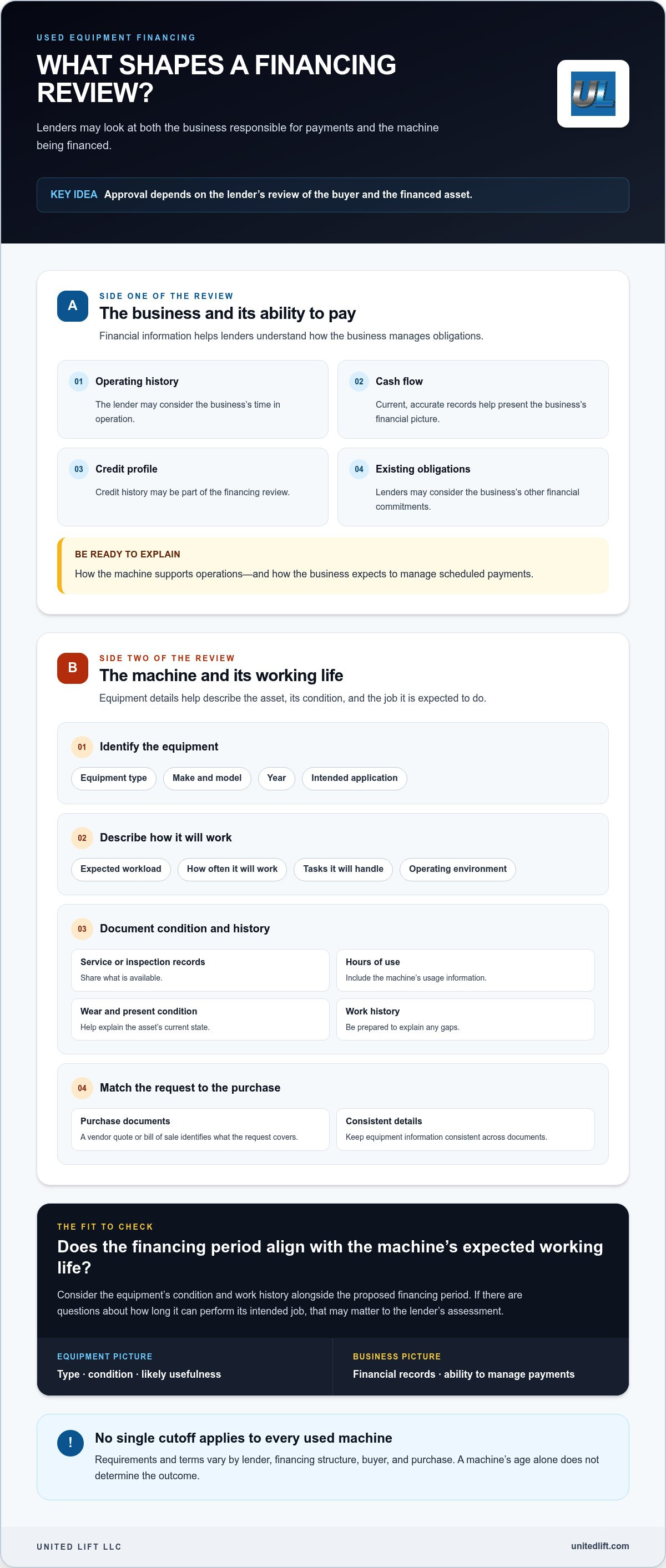
A financing review looks at both sides of the purchase: the business responsible for payments and the machine being financed. Lenders may assess financial records, credit history, and whether the business appears able to manage the proposed obligations. If the arrangement is asset-backed, the equipment’s type, condition, and likely usefulness may also inform the decision.
Approval depends on the lender’s review of the buyer and financed asset. Requirements vary by lender, financing structure, buyer, and purchase. There’s no single age or condition cutoff that applies to every used machine. Give the lender a clear, consistent picture of the equipment and the business’s ability to pay.
How the used machine affects a financing review
Organize the machine details before starting an application. Record its equipment type, make, model, year, and intended application. A forklift used for routine warehouse handling has a different work profile from a lift used for elevated tasks. Explain how the machine will be used and how often it’s expected to work.
Condition and usage history help describe the asset. Available service or inspection records, hours of use, and information about wear can help explain its present state and expected working life. Purchase documents, such as a vendor quote or bill of sale, identify what the financing request covers. Keep the details consistent across documents, and be ready to explain gaps in the machine’s history rather than assuming its age alone determines the outcome.
Consider whether the expected working life aligns with the proposed financing period. If the machine’s condition or work history raises questions about how long it can perform its intended job, that may matter to the lender’s assessment. Equipment finance practices vary across the market; the Equipment Leasing and Finance Association’s industry insights offer broader context on the sector.
How a business’s finances enter the review
Lenders may review operating history, cash flow, credit profile, and existing financial obligations to understand how a business manages payments. Qualification and documentation requirements vary, so one lender’s process may differ from another’s. A new or seasonal business, for instance, may need to present its financial picture differently from an established business with steady revenue.
Prepare current, accurate records and make sure the requested amount reflects the equipment purchase. Be ready to explain how the machine supports operations and how the business expects to manage scheduled payments. A complete application can make the review more straightforward, but it can’t guarantee approval or particular terms.
As you narrow down a machine, explore used equipment and financing options with United Lift. United Lift sells used material handling equipment and facilitates financing options for business customers.
Compare used equipment financing structures and trade-offs
With used equipment financing, the structure affects more than the payment schedule. It can shape ownership, flexibility, and what happens when the agreement ends. A loan generally funds a purchase, while a lease sets out terms for using equipment. Neither is automatically the better fit. Compare the contract with your work needs, cash priorities, and plans for the machine.
Equipment loan versus lease: the basic distinction
A loan finances the purchase of an asset, subject to the loan agreement. A lease provides for use of equipment under a contract, with ownership and end-of-agreement options determined by its terms. Read the agreement itself: the contract controls ownership and end-of-term rights, so don’t assume a particular outcome based on the label alone.
| Consideration | Equipment loan | Equipment lease |
|---|---|---|
| Ownership | Structured toward purchasing the asset, as defined by the agreement. | Use is governed by the lease; ownership depends on the contract. |
| Payments | Scheduled payments follow the loan agreement. | Payment schedule and responsibilities follow the lease agreement. |
| End of agreement | Review the remaining obligations and ownership provisions. | Review the available end options and any return or purchase responsibilities. |
| Flexibility | Consider how the purchase fits plans to keep and use the machine. | Consider how the agreement fits plans that may change over time. |
This is a high-level guide, not a substitute for reviewing the actual contract. Agreements differ, and a used machine’s age, condition, and expected working life can affect how well an arrangement fits. For example, a business expecting to keep a forklift in regular service may weigh ownership differently from one whose equipment needs could change before the agreement ends.
Compare the full commitment, not just the payment
Review the complete agreement before deciding. Compare payment frequency, the length of the commitment, any fees, and responsibilities at the end. Check how the agreement addresses changes in your operation or no longer needing the machine. If an attachment is included in the purchase, understand how it is treated in the financed amount and contract.
A lower periodic payment may seem easier to manage, but it doesn’t automatically mean a lower total cost. Compare the overall obligation and end-of-agreement responsibilities, not just the amount due each period. A payment that fits your schedule isn’t enough on its own; the full financing arrangement must fit your business and equipment plans.
Start with three questions: How intensively will the machine work? How important is eventual ownership? How much cash does the business need to keep available for other priorities? A machine expected to support daily operations for years may call for a different approach from equipment needed for a changing workload. Match the structure to the machine’s intended use and working life, then review the contract details before committing.
Prepare for a used equipment financing application
A focused application starts with a clear purchase plan. Define the work the machine must do, organize the purchase details, and compare written financing terms with realistic business cash flow. This helps you present a consistent request and assess the full commitment without assuming approval or particular terms.
Build a clear equipment and purchase profile
Begin with the machine’s make, model, year, known condition, and intended work. Note the required capacity, operating environment, expected utilization, and any attachments needed for the job. For a forklift purchase, define the materials it needs to handle, where it will operate, and how often it will be used. Match these details to the purchase documents so the requested equipment and amount are easy to identify.
Use this ordered checklist to get ready:
- Define the job. Identify the tasks, work conditions, capacity, and frequency of use the machine must support.
- Document the equipment. Gather available details about its make, model, year, condition, usage history, and included attachments.
- Organize purchase records. Keep the vendor quote and other documents describing the equipment and purchase together.
- Follow the application instructions. Prepare the business and financial records requested by the financing provider, using current, consistent information.
- Compare written offers. Review payment timing, total obligations, fees, and end-of-term conditions before deciding.
Organize application details and compare written terms
Documentation requests vary, so use the lender’s instructions as your checklist rather than assuming every application needs the same records. Make sure figures and business details match across forms and supporting documents. If the machine’s history or condition appears in more than one document, keep those descriptions consistent and accurate.
Compare each written arrangement as a whole. Look beyond the periodic payment: check how often payments are due, the full obligations over the agreement, any stated fees, and the responsibilities or options at the end. Consider whether the schedule fits your business’s normal cash flow, including periods when revenue or operating demands may shift. A payment that appears manageable in one month still needs to work across the full commitment.
Before signing, review the agreement’s ownership terms and any conditions that could affect your plans for the equipment. If a term is unclear, request an explanation from the financing provider before committing. Careful preparation won’t guarantee a decision, but it can help you make a more informed comparison and avoid overlooking details that matter to your operation.
As you prepare your purchase, discuss used equipment and financing with United Lift to consider the machine and financing options together.
Explore used equipment financing through United Lift
Choosing equipment and arranging financing work best as connected decisions. United Lift sells used material handling equipment and facilitates financing options for business customers. You can consider the machine’s intended job alongside the financing approach, rather than treating them as separate questions.
Start with the work that needs to get done. A suitable category depends on your operating environment, capacity needs, and how the equipment will be used. United Lift’s used equipment categories include forklifts, boom lifts, telehandlers, scissor lifts, and attachments. Brands represented in its new and used equipment offerings include Hyster, Yale, Toyota, JLG, Genie, and Caterpillar.
Match the equipment category to the job
Forklifts are a common option for moving materials. Boom lifts and scissor lifts are categories to consider when work requires access at height. Telehandlers may suit applications that call for their particular handling configuration. Attachments can also be part of an equipment purchase when they support the tasks the machine is expected to perform.
Be specific about your requirements. Think through the work area, the materials or tasks involved, required capacity, and expected frequency of use. A buyer looking for equipment to move materials across a worksite may have different priorities from one planning elevated work. Start with the job, not simply the machine category or brand. This helps narrow the equipment options before you consider how to finance a purchase.
Take the next step toward financing used equipment
Once you’ve identified a suitable category, review used equipment options and gather the details that matter for your purchase, such as the machine’s model information, condition, and intended application. Consider how its working role aligns with the financing commitment you’re evaluating. The details of a financing arrangement depend on the agreement and buyer circumstances, so review written terms carefully before moving ahead.
United Lift facilitates financing options for business equipment customers. Discussing financing alongside the equipment purchase can help you consider how the selected machine and payment obligations fit your business plans. Whether you’re comparing forklifts, lifts, telehandlers, or attachments, focus on practical fit: the equipment should match the work, and the arrangement should make sense for your business.
Ready to take the next step? Explore used equipment financing with United Lift and consider equipment options for your business purchase.
Choose a machine and plan that move your business forward
Connect your equipment decision to the work ahead. Consider how the machine will fit into daily operations, how long you expect to rely on it, and what payment commitment your cash flow can support. This practical view keeps the purchase focused on business needs, not just the appeal of a particular machine or payment schedule.
As you compare options, keep purchase details and financing terms together. Reviewing both makes it easier to judge whether the equipment and agreement suit your plans. United Lift facilitates financing options for business customers, so you can explore equipment and financing as part of the same purchase conversation.
Explore used equipment and financing options with United Lift and take the next step toward a machine that fits your operation. A clear plan can help you move ahead with confidence and keep your business needs at the center of the decision.
Frequently Asked Questions
Can I finance used equipment for my business?
Yes, a business may be able to finance used machinery, but approval and terms depend on the financing provider’s review of the buyer and equipment. Start by identifying the machine and gathering purchase details, such as a vendor quote and available condition records. United Lift facilitates financing options for business customers purchasing equipment, including used material handling machinery. A clear description of the machine’s role can help explain why it’s needed.
What types of used equipment can be financed?
Financing may be available for different types of business equipment, but eligibility depends on the provider and agreement. Material handling options include forklifts, boom lifts, telehandlers, and scissor lifts, while industrial facilities may finance specialized processing machinery from suppliers like F.A. Maker. For example, a business replacing equipment used in a specific part of its operation can describe the tasks the machine must handle. Describe each item included in the purchase, since models and attachments may have different financing requirements.
Do lenders finance older used equipment?
Possibly. An older machine isn’t automatically eligible or ineligible under every financing program. A provider may review its age, condition, value, expected use, and the buyer’s financial profile. For instance, maintenance records and a clear account of how the machine has been used can help distinguish two machines of the same age. There’s no universal age cutoff, so base your decision on the requirements and written terms for that specific purchase.
What documents are typically needed for used equipment financing?
Required documents vary, but a provider may request business identification, financial information, credit-related details, and records describing the equipment purchase. Useful machine details can include make, model, year, condition, and a vendor quote. Organize files by topic so you can respond accurately to the application instructions. If the provider requests a particular document format or additional information, follow those directions rather than relying on a generic checklist.
Is leasing or a loan better for used equipment?
Neither is best for every business. A loan may support purchasing the machine under its agreement, while a lease provides use under contractual terms. Compare a plan to keep a machine in service for years with one where equipment needs may change sooner. Review payment schedules, total obligations, fees, ownership rights, and end-of-term conditions before choosing a structure.
Can I finance used equipment with limited business credit history?
A limited business credit history doesn’t decide the outcome by itself. Providers set their own review criteria and may consider the business’s financial information, operating history, and the machine being financed. Prepare a clear, consistent application that explains the purchase and includes the records requested. If the business is new or has limited financial history, avoid assuming the result in advance; the provider’s review determines whether its criteria are met.
Can equipment attachments be included in used equipment financing?
Possibly, depending on the provider, agreement, and purchase structure. If an attachment is part of the equipment request, identify it separately in the purchase details so the provider can see what the proposed financing covers. For example, include the attachment on the vendor quote rather than describing only the main machine. Review the written agreement to understand which assets and obligations it includes; attachments aren’t automatically covered.
- Tags: business loans, equipment leasing, forklift financing, heavy equipment, material handling, used equipment financing, working capital
